In an industry defined by complexity, constant regulatory change, workforce strain, and technological acceleration, healthcare leadership today demands far more than vision. It demands translation. Translation of strategy into execution. Translation of complexity into clarity. Translation of pressure into performance without sacrificing humanity.
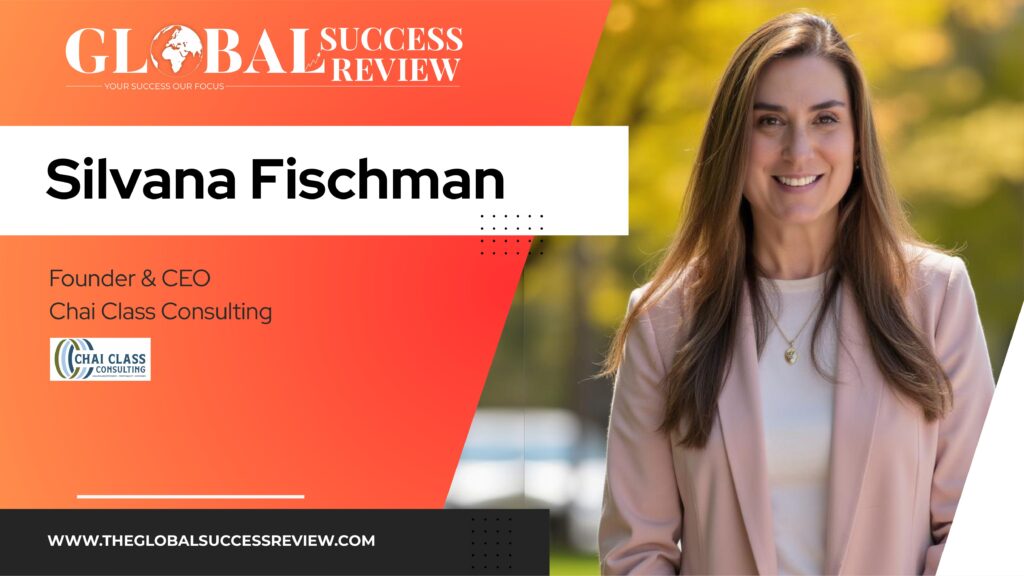
Few leaders embody that translation more effectively than Silvana Fischman, Founder and CEO of Chai Class Consulting.
Recognized as one of The Most Influential Business Leaders to Watch in 2026, Silvana represents a new generation of healthcare leadership, one that balances rigor with empathy, operational precision with human-centered design, and measurable performance with sustainable culture.
With more than two decades of experience spanning clinical practice, cardiovascular operations, value-based care, and strategic advisory leadership, Silvana has built a reputation for doing something many consultants struggle to achieve, staying in the work long enough to make change stick.
Her approach is not about elegant PowerPoint decks or theoretical playbooks. It is about clarity that moves organizations forward, accountability that builds trust, and systems that empower the people who actually deliver care.
And in 2026, when healthcare stands at yet another inflection point, that kind of leadership is not optional, it is essential.
A Career Built on Purposeful Pivots
Silvana’s path into consulting was not a single defining leap. It was a series of intentional pivots shaped by experience, resilience, and insight.
Beginning in clinical practice and later transitioning into healthcare operations in the United States, she quickly found herself in roles that expanded beyond any one title. She worked at the intersection of care delivery, strategy, compliance, and operations, where decisions made in boardrooms directly influenced outcomes at the bedside.
Over time, she noticed a pattern.
Organizations were filled with intelligent leaders and dedicated clinicians. Yet performance gaps persisted, not because of a lack of effort or intelligence, but because of misalignment, fragmented execution, and invisible friction across departments.
She realized something critical, her value was not confined to one organization. Her strength was in entering complex systems, diagnosing root causes, clarifying priorities, and guiding leaders through execution.
Entrepreneurship became a natural extension of that realization.
Through Chai Class Consulting, Silvana built a firm designed not simply to advise, but to partner. Not simply to analyze, but to operationalize. Not simply to identify problems, but to help leaders carry solutions through the messy reality of implementation.
Every pivot added to her toolkit. Every setback strengthened her resilience. And together, they shaped a leadership philosophy rooted in adaptability, clarity, and deep respect for the people doing the work.
Leadership Grounded in Clarity, Accountability, and Humanity
In today’s healthcare landscape, where regulatory demands, reimbursement shifts, workforce shortages, and AI integration converge, leadership can easily become reactive.
Silvana’s philosophy resists that reactionary pull.
Her leadership model is grounded in three core principles:
Clarity. Accountability. Human-centered execution.
Clarity, in her view, is a performance accelerator. When teams lack clarity around priorities, ownership, and success metrics, energy is wasted navigating confusion instead of improving outcomes.
She has seen firsthand how simple alignment can transform performance. When leadership, clinicians, and operations align around a single shared objective, with defined ownership, measurable metrics, and transparent workflows, momentum builds quickly.
Accountability, for Silvana, is not about enforcement. It is about shared ownership. If a solution fails to take hold, it is not just a client’s challenge, it is a shared responsibility.
And humanity is not a soft afterthought. It is foundational.
Healthcare professionals bring their full lives to work. Burnout is not solved through policy alone. It is addressed through leadership that listens, designs smarter systems, and respects the emotional labor embedded in care delivery.
Exceptional leaders, she believes, are distinguished not by checklists but by their ability to create direction amid ambiguity and trust amid pressure.
From Insight to Execution: A Defining Realization
One defining moment in Silvana’s professional evolution came when she recognized that insight alone was not impact.
She had observed organizations receive thorough assessments and strategic roadmaps, only to struggle when real-world execution became unpredictable and messy.
That realization shaped the DNA of Chai Class Consulting.
Silvana is committed to building a firm that does not simply deliver recommendations and step away. Instead, her team partners through friction. They test assumptions in real environments. They adjust when necessary. They remain accountable for outcomes.
Execution, in her model, is not linear. It is iterative. And leadership requires staying close enough to the work to ensure strategy survives contact with reality.
Strengthening Value-Based Care from the Inside Out
Value-based care has long been heralded as the future of healthcare. Yet many organizations struggle to realize its promise.
Silvana’s perspective is clear, value-based care rarely fails because of reimbursement structure. It fails because of execution breakdowns.
Common gaps she observes include:
• Overcomplicating implementation instead of pacing progress.
• Departmental silos creating parallel solutions.
• Misalignment between clinical, coding, and data teams.
• Lack of shared accountability across functions.
The model itself does not vary dramatically from organization to organization. But implementation does.
Sustainable success, she argues, requires embedding value-based principles into daily operations rather than layering them as temporary initiatives.
This means:
• Designing cross-functional ownership.
• Building simple, repeatable review rhythms.
• Giving frontline teams authority to act on data insights.
• Integrating documentation, compliance, and care coordination into the natural flow of work.
When the model becomes how we operate rather than an additional program, performance improves organically.
Improving Compliance Through Intelligent AI Integration
One of Silvana’s most impactful engagements involved improving patient compliance through AI-driven operational redesign.
The organization in question had solid tools and dedicated care teams, yet follow-through was inconsistent. Rather than adding more technology, Silvana’s approach began with a different question:
Where exactly are the drop-offs occurring, and why?
Using AI-powered insights, her team identified patients at the highest risk of missing follow-ups, delaying medications, or disengaging from care pathways. Instead of overwhelming teams with new dashboards, these insights were embedded directly into existing workflows.
Clear response timeframes were defined. Accountability measures were established. Weekly progress metrics were introduced. Care teams were trained to interpret AI signals and intervene proactively.
The results:
• 20 percent improvement in patient compliance.
• Reduced administrative burden.
• Transition from reactive outreach to proactive engagement.
For Silvana, the lesson was clear, AI delivers impact only when paired with clarity and execution discipline. Technology alone does not transform care. Operational integration does.
Financial Sustainability and Patient-Center Care: A False Dichotomy
Risk coding, compliance, and revenue optimization are areas where Silvana brings deep expertise. Yet she rejects the notion that financial sustainability and patient-Center outcomes are competing priorities.
In her experience, they are interconnected.
Accurate documentation supports reinvestment in care teams. Embedded compliance reduces costly audits. Financial integrity strengthens access and continuity.
The tension emerges only when financial goals are pursued in isolation from clinical reality.
True balance comes from designing systems where doing right by the patient is also the most sustainable operational path.
Redesigning Incentives for Long-Term Outcomes
Healthcare incentives often emphasize short-term volume metrics rather than longitudinal outcomes.
Silvana advocates for shared, simple, outcome-connected incentive structures.
Effective redesign includes:
- Cascading incentives across roles, not limiting them to senior leadership.
- Tying compensation partially to longitudinal patient outcomes.
- Blending process measures teams’ control daily with broader performance metrics.
- Maintaining transparent dashboards for real-time visibility.
This alignment reduces competition across departments and strengthens collaboration toward meaningful outcomes.
Empowering Private Practice Leaders
Private practice founders often shoulder both clinical and executive responsibilities simultaneously.
Silvana believes durability is less about working harder and more about building smarter leadership structures.
Fractional leadership, when done thoughtfully, provides:
- Experienced executive guidance without premature long-term hires.
- A bridge to build internal leadership capacity.
- A “contract-to-commitment” model that allows flexibility during growth.
External leadership support, in her philosophy, should strengthen internal ownership, not replace it.
When structured correctly, fractional leadership accelerates maturity without creating dependency.
AI, Predictive Care, and the Next Five Years
Over the next five years, Silvana sees AI reshaping healthcare not through replacement, but through augmentation.
Its greatest impact will come from:
- Identifying early compliance risks.
- Surfacing predictive signals before crises occur.
- Reducing administrative friction for clinicians.
- Prioritizing outreach intelligently.
- Embedding insights within real workflows.
The difference between helpful AI and harmful AI, she argues, lies in intent and design.
When layered on without context, AI becomes noise.
When embedded with accountability and human oversight, it becomes a quiet enabler of better care.
Efficiency Without Eroding Trust
As healthcare systems face increasing cost pressure, leaders must navigate efficiency improvements carefully.
Silvana approaches this challenge from both a professional and patient perspective.
Efficiency framed as cost-cutting erodes trust.
Efficiency framed as waste reduction builds confidence.
Examples of thoughtful efficiency:
- Simplifying intake processes.
- Reducing redundant data entry.
- Clarifying billing structures.
- Increasing transparency around facility fees.
- Advocating for smarter contracting strategies.
Leaders must protect patient trust while advocating for systemic reform beyond frontline providers.
Trust as an Operational Advantage
Silvana does not view trust as a soft skill. She views it as a measurable performance driver.
Trust manifests operationally through:
- Lower turnover.
- Faster onboarding.
- Reduced escalations.
- Stronger engagement scores.
- Increased internal referrals.
- More effective delegation.
Trust is bidirectional.
Leaders must assume capability and intent in their teams. Teams must feel safe offering honest feedback.
When trust flows both ways, accountability becomes shared, not enforced.
And performance accelerates naturally.
Integrity, Kindness, and Fairness in Action
At the core of Silvana’s leadership are three values:
Integrity. Kindness. Fairness.
Integrity means doing what is right, even when unseen.
Kindness is not softness; it is presence and care.
Fairness means clarity of expectations and equity in decisions.
Her volunteer work with the Friendship Circle of Miami reinforces these values. Supporting families of individuals with special needs grounds her leadership in empathy and perspective.
One defining cultural moment during her tenure leading a cardiovascular operations group illustrates her belief in everyday leadership.
An echocardiography team of more than 100 people chose to redirect birthday gift exchanges into a shared fund. Over the year, they purchased essential items, socks, blankets, water, snacks, and personally distributed them to individuals experiencing homelessness.
It was not a publicity initiative. It was a choice.
A small cultural pivot with meaningful ripple effects.
For Silvana, culture is built not through slogans, but through daily decisions.
The Art of the Pivot
Through her “Art of the Pivot” talks with college students, Silvana shares the realities of nonlinear career paths.
Healthcare once carried a reputation for stability and pride. Today, students often see strain before they see purpose.
Her message is honest:
Careers are rarely linear.
Resilience is learned.
Leadership is built over time.
Purpose is discovered through pivots.
If healthcare can re-center humanity, sustainability, and clarity, she believes the next generation will once again see it as a vocation worth choosing.
The Legacy Ahead
Looking toward the future, Silvana hopes her legacy will not be defined by titles but by strengthened systems and empowered people.
She wants healthcare environments where:
- Teams can perform without burning out.
- Leaders can navigate complexity with clarity.
- Technology supports, not overwhelms.
- Financial sustainability aligns with ethical care.
- Young professionals see possibility rather than exhaustion.
Leaving healthcare better than she found it, for leaders, teams, and the next generation, is the legacy that matters most.
Why Silvana Fischman Is a Leader to Watch in 2026
In a time when healthcare faces unprecedented pressure and transformation, influence is not measured by visibility alone.
It is measured by impact.
Silvana Fischman’s influence lies in her ability to:
- Turn strategy into execution.
- Transform friction into clarity.
- Embed AI into real workflows.
- Align incentives with outcomes.
- Build trust as performance infrastructure.
- Strengthen private practice leadership.
- Advocate for humane efficiency.
- Lead with integrity, kindness, and fairness.
As healthcare continues evolving through value-based care, AI integration, and structural reform, leaders who combine operational discipline with human-centered design will define the next era.
Silvana Fischman is not simply responding to that era.
She is helping build it.
And that is precisely why she stands among The Most Influential Business Leaders to Watch in 2026.
Connect with Silvana Fischman
Founder, CEO – Chai Class Consulting
Location: Miami, Florida, United States
Website: www.chaiclassconsulting.com