If a customer can’t explain why your product matters to them, you don’t have a product problem. You have a positioning problem.
Every product claims to be innovative. Every brand promises value. Yet only a few manage to stand out, command loyalty, and shape entire categories. The reason, according to product marketing strategist Laurier Mandin, lies not merely in the product itself, but in how its unique value is communicated to the world.
For more than three decades, Mandin has dedicated his career to solving one of business’s most difficult questions: Why do great products fail while others dominate their markets?
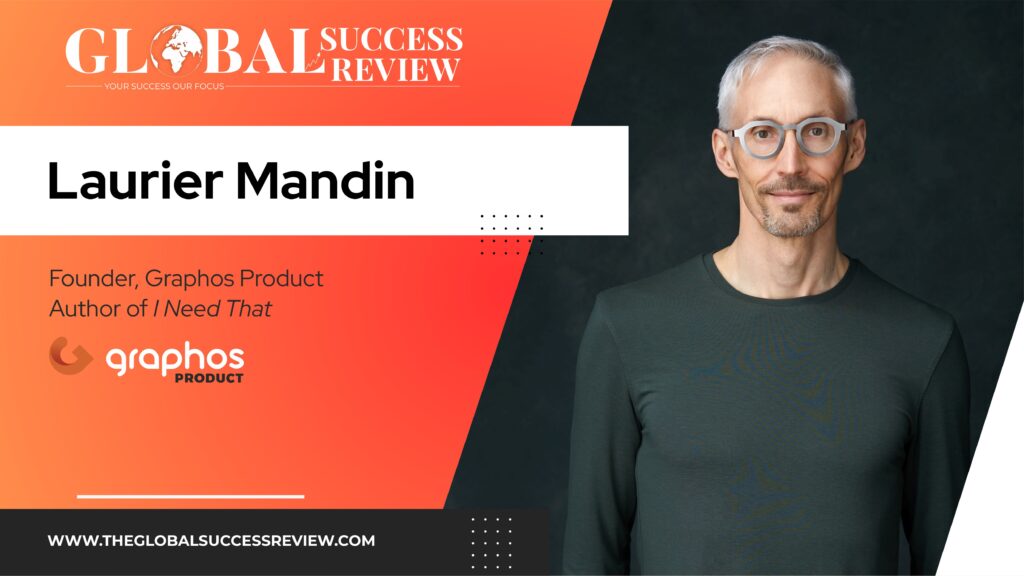
As the founder of Graphos Product, he has worked with innovators, startups, and global organizations to define product positioning strategies that cut through market noise and create powerful differentiation.
His view is direct: the goal is not broad appeal, but precise relevance. The most successful products do not try to appeal to everyone. Instead, they speak clearly and compellingly to the people who will benefit from them the most.
Today, as the author of I Need That and a respected authority on product positioning strategy, Mandin is widely regarded as one of the most influential thinkers shaping the future of marketing and brand strategy.
Being recognized among the Top 5 Trailblazing Leaders Transforming Product Positioning in 2026 reflects a lifetime commitment to understanding how products earn attention, trust, and ultimately, market leadership.
A Career Built on Words, Curiosity, and Strategic Thinking
The roots of Laurier Mandin’s career can be traced back to an early fascination with communication.
With a background in journalism, Mandin developed a deep appreciation for the power of words. Journalism trained him to ask questions, analyze complex information, and translate ideas into messages that resonate with audiences.
That foundation proved invaluable when he entered the world of marketing strategy.
“In journalism, clarity is everything,” Mandin explains. “You learn that audiences don’t have the time or patience to decode complicated ideas. The message has to be clear, tight, and compelling.”
This same philosophy eventually shaped his approach to product positioning.
During the early years of his career, Mandin encountered a marketing book that profoundly influenced his thinking: Positioning: The Battle for Your Mind by marketing strategists Al Ries and Jack Trout.
The book introduced a concept that would become central to Mandin’s professional philosophy, the idea that the human mind has limited capacity for brands and messages. To succeed, companies must occupy a distinctive mental position in the customer’s mind.
That insight would become the foundation for the firm he founded in 1993.
The Birth of Graphos Product
More than thirty years ago, Laurier Mandin launched Graphos Product with a clear mission: help organizations communicate the true value of their products.
At the time, many marketing agencies focused primarily on creative campaigns or advertising execution. Mandin believed something more fundamental was needed, a clear strategic positioning rooted in the product itself.
His philosophy was straightforward but unconventional: before promoting a product, understand it deeply.
That meant actually using the product, exploring its capabilities, and identifying the “superpowers” that made it unique.
Only then could a brand communicate its value in a way that felt authentic and compelling.
“Our approach has always started with the product,” Mandin explains. “You need to experience it firsthand. That’s how you discover its real strengths.”
This philosophy helped Graphos Product develop a reputation for strategic depth and clarity, qualities that clients increasingly sought as markets became more competitive.
The Leadership Philosophy Behind the Work
Leadership at Graphos Product is defined by collaboration rather than hierarchy.
Mandin describes his approach as humble, collaborative, and deeply invested in client success.
Rather than operating as an external vendor, his team works as an extension of each client’s internal organization.
“We take the work personally,” he says. “When we start a project, we think about the outcome as if it were our own product.”
That level of commitment stems from a genuine passion for the work.
Even after decades in the industry, Mandin says the excitement of starting a new project has never faded.
“My wife sometimes asks how I still get so energized about every new client engagement,” he says with a smile. “The answer is simple: the challenge of building something meaningful never stops being exciting.”
This enthusiasm, combined with decades of experience, has helped Graphos Product maintain unusually high team retention in an industry known for rapid turnover.
Many members of the team have worked together for more than a decade, creating a rare continuity of expertise.
Why Product Positioning Matters More Than Ever
According to Mandin, the modern marketplace presents unprecedented challenges for businesses.
Competition has intensified across virtually every industry. Digital platforms have lowered barriers to entry, enabling new products to reach global audiences almost instantly.
At the same time, marketing costs have increased dramatically, making it harder for brands to achieve profitable growth.
In such an environment, positioning becomes essential.
“When everything looks comparable, price becomes the only lever,” Mandin explains. “Without clear positioning, a product disappears into the sea of sameness.”
Positioning, in his view, is not simply a branding exercise; it is the foundation of long-term success.
When done correctly, positioning establishes a product as unique and irreplaceable.
When done poorly, even strong products risk becoming commodities competing solely on price.
Learning from Product Failures
One of the insights that shaped Mandin’s thinking came from observing patterns in product failures.
Throughout his career, he noticed that many innovative products struggled not because of weak technology or poor quality, but because of flawed assumptions about their markets.
Innovators often believed that customers would think about the product exactly as they did.
But reality rarely matched those expectations.
“I realized that innovators frequently lack objectivity about their own products,” Mandin explains. “They fall in love with the idea and assume the market will feel the same way.”
This insight eventually inspired Mandin to write his book I Need That, which guides innovators through the process of validating their ideas before launching them.
His goal was to prevent entrepreneurs from making costly mistakes that could have been avoided through proper research and positioning.
The CLIMB Framework: Understanding Customer Needs
One of Graphos Product’s most distinctive methodologies is its Customer Life-Improving Mechanism and Benefits (CLIMB) framework.
The framework helps companies identify how their products improve customers’ lives across multiple dimensions.
These dimensions range from basic functional needs to deeper psychological motivations, including the pursuit of identity, status, or personal fulfillment.
Through structured workshops and collaborative sessions with client stakeholders, the Graphos team analyzes every aspect of the product’s value.
This process often leads to powerful insights and sometimes surprising discoveries.
“When we get it right, there’s often a ‘Eureka moment,’” Mandin says. “You suddenly see how the product changes someone’s life in a way no competitor can.”
That moment becomes the foundation for positioning strategy.
The Apple Myth: Why Copying Success Doesn’t Work
One of the most common mistakes companies make, according to Mandin, is trying to replicate the success of iconic brands.
Many clients tell him they want to become “the next Apple.”
While admiration for successful companies is understandable, Mandin believes the idea is fundamentally flawed.
“Apple is successful because it’s an innovator,” he explains. “Copying an innovator does not make you one.”
Instead, companies should focus on discovering what makes their own product unique.
Positioning works best when it highlights a value proposition that competitors cannot easily replicate.
This distinctiveness allows brands to command premium pricing and build long-term loyalty.
The Human Element in an AI-Driven World
The rise of artificial intelligence is transforming nearly every aspect of marketing.
Automation tools can generate content, analyze data, and produce campaigns at unprecedented speed.
While Mandin acknowledges the benefits of AI, he also believes it poses a significant risk to the quality of positioning work.
“AI can generate language,” he says. “But it cannot generate conviction based on real human empathy.”
AI is incapable of experiencing products in the same way people do. It us unable to feel excitement, frustration, or aspiration.
These emotions, however, are precisely what drive purchasing decisions.
“Positioning ultimately depends on deep human insight,” Mandin explains. “It requires understanding how people feel about a product and how it fits into their lives.”
For this reason, he predicts that the future of positioning will divide into two categories: exceptional work created by experienced strategists and generic messaging produced by automated tools.
The Power of Storytelling and the “Coveted Condition”
One of Mandin’s most compelling concepts is the Coveted Condition™, a term he coined to describe the ideal future state customers aspire to achieve.
Human beings spend a significant portion of their time imagining possibilities and dreaming about the future.
Marketing, at its best, taps into these aspirations.
“People constantly ask themselves What if?” Mandin explains. “That distinctly human question drives imagination and ambition.”
By connecting products to those aspirations, brands can create powerful emotional connections with their audiences.
Storytelling becomes the vehicle that transports customers from their current situation to the future they desire.
This narrative approach is a central theme in I Need That, where Mandin explores how positioning can shape not only purchasing decisions but personal identity.
Generational Change and the Future of Markets
Looking ahead, Mandin believes generational shifts will reshape consumer behavior in unexpected ways.
Younger generations, including Gen Z and Gen Alpha, often challenge traditional assumptions about lifestyle and consumption.
Many drink less alcohol, show less interest in car ownership, and prioritize experiences or alternative values over conventional milestones.
At the same time, they are embracing surprising trends, such as renewed interest in analog products like vinyl records and cassette tapes.
These behaviors reflect a desire for authenticity and personal control in a world increasingly dominated by algorithms.
For marketers, this shift presents both challenges and opportunities.
Companies that understand these evolving preferences will gain a significant advantage in the years ahead.
What Defines a Trailblazing Leader
For Mandin, the concept of trailblazing leadership is deeply connected to exploration.
“Trailblazers go ahead of the beaten path,” he explains. “They discover new routes and guide others safely through them.”
In the context of product positioning, this means helping organizations navigate uncertainty, identify opportunities, and take bold strategic steps.
It requires curiosity, courage, and a willingness to challenge conventional thinking.
Through his work with Graphos Product, Mandin continues to embody this philosophy, helping innovators find clarity in complex markets.
A Legacy of Strategic Thinking
After more than three decades in the field, Laurier Mandin remains as passionate about product positioning as ever.
His career reflects a rare combination of intellectual curiosity, disciplined thinking, and genuine enthusiasm for helping organizations succeed.
From founding Graphos Product to authoring I Need That, he has dedicated his work to answering a fundamental question: How can products truly stand out in the minds of customers?
As businesses navigate an increasingly complex marketplace, that question has never been more important.
In competitive markets, attention has never been more costly. Clarity is the way to achieve returns on that investment.