Marcelo Canha: Architecting Trust in the Age of AI and Global Data Governance
In an era where data is often described as the world’s most valuable asset, the responsibility of protecting it has evolved into one of the most critical leadership roles in modern business. Organizations today are no longer judged solely by their innovation or growth, but by how responsibly they handle data, how transparently they operate, and how effectively they balance technological advancement with ethical governance.
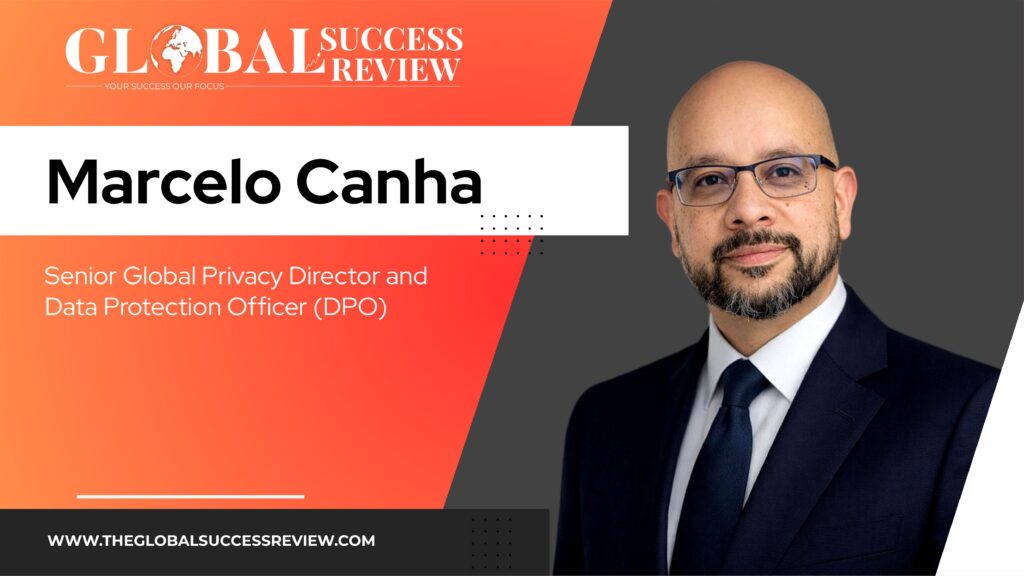
At the center of this transformation stands Marcelo Canha, Senior Global Privacy Director and Data Protection Officer (DPO), a leader whose work is redefining how organizations translate privacy, compliance, and AI governance into sustainable execution.
With more than two decades of experience spanning industries such as pharmaceuticals, videogames, telecommunications, biotech, ad tech, and entertainment, Marcelo has established himself as a pragmatic and execution-focused authority in global data protection.
Recognized through consecutive nominations at the PICCASO Privacy Awards Europe and known for his thought leadership and mentoring across global forums, Marcelo represents a new generation of governance leaders, those who move beyond theory and actively shape how organizations translate regulatory complexity into structured, sustainable execution.
From Delivery to Governance: A Career Built on Execution
Marcelo’s journey into data protection and AI governance was not born out of academia or theory. Instead, it emerged from real-world delivery in complex, high-risk environments.
Beginning his career as a global project and programme manager, Marcelo was responsible for leading large-scale technology initiatives in heavily regulated sectors. These early experiences laid the foundation for his approach to governance, one rooted in execution discipline, accountability, and measurable outcomes.
A defining moment came during his work on the Rio Olympic Games in 2016. Tasked with leading elements of a KYC and AML solution, Marcelo’s responsibilities extended beyond traditional project delivery into the protection of highly sensitive personal and medical data of athletes. This included overseeing data mapping, data quality, and data protection programmes within a highly visible and regulated environment.
It was during this experience that a critical realization took shape: the greatest risks were not technological failures, but the absence of structured governance capable of translating legal and ethical requirements into operational reality.
This insight became the cornerstone of his career.
From that point forward, Marcelo shifted his focus toward building governance frameworks that bridge the gap between regulation and execution, ensuring that privacy and compliance are not abstract obligations, but embedded organizational capabilities.
Redefining Privacy Leadership in a Complex World
As a Global Privacy Director and statutory DPO, Marcelo operates in a landscape defined by constant change, regulatory fragmentation, and the rapid rise of AI-driven technologies.
His leadership philosophy is grounded in three fundamental principles: clarity, accountability, and judgment.
In Marcelo’s view, effective privacy leadership is not about interpreting laws in isolation. Instead, it is about ensuring that regulatory intent is embedded into decision-making processes across the organization. This requires engaging a diverse set of stakeholders, from executive leadership and legal teams to engineers, security professionals, and product managers, while maintaining consistent governance standards.
One of the defining challenges in modern data protection is balancing proximity and independence. As a DPO, Marcelo emphasizes the importance of being deeply embedded within the business while retaining the authority to challenge decisions when risks or ethical concerns arise.
This dual role requires not only technical expertise, but also strong judgment and the ability to navigate complex organizational dynamics.
Marcelo’s approach is clear: governance should simplify complexity, not add to it. By prioritizing structured frameworks over bureaucratic processes, he ensures that privacy and AI governance act as enablers of innovation rather than barriers.
Building Trust Through Structure and Transparency
In global organizations, trust is not built through assurances; it is built through evidence.
Marcelo has consistently emphasized that credibility in privacy and compliance comes from demonstrable governance. This includes clearly defined frameworks, documented risk assessments, and decision-making processes that stakeholders can understand and rely upon.
His approach to stakeholder engagement is both strategic and practical. He frames discussions differently depending on the audience, included but not limited to: for executives, he emphasizes risk clarity and business impact; for legal teams, regulatory certainty; and for technical teams, operational feasibility.
This ability to translate complex privacy concepts into meaningful insights for different stakeholders has been a key factor in his success.
Equally important is his commitment to independence and preparedness. Marcelo prioritizes end-to-end visibility of data flows, rigorous impact assessments, and comprehensive documentation. This ensures that when challenges arise, whether internal escalations or regulatory inquiries, decisions are supported by a defensible rationale.
A Framework-Driven Approach to Governance
One of Marcelo’s most significant contributions to the field of data protection is his development of a GDPR-to-NIST aligned governance framework.
This framework addresses a common challenge faced by organizations: the disconnect between regulatory requirements and operational execution.
While regulations such as GDPR provide clear legal expectations, many organizations struggle to translate these into actionable controls that can be implemented, measured, and sustained. Marcelo’s framework bridges this gap by mapping legal obligations to enterprise risk management structures based on NIST principles.
Rather than creating parallel systems, the framework integrates privacy directly into existing governance and security structures. This allows organizations to:
- Measure compliance more effectively
- Align privacy with enterprise risk management
- Enhance auditability and regulatory readiness
- Build scalable and sustainable governance models
The value of this approach lies in its practicality. By focusing on execution rather than theory, Marcelo has enabled organizations to move beyond checkbox compliance and toward resilience-driven governance.
This work has not only been implemented across multinational organizations but has also influenced broader industry discourse through his published book and speaking engagements.
Scaling Privacy in High-Volume, Real-World Environments
Marcelo’s expertise has been particularly impactful in operationally intensive industries such as video gaming and digital entertainment, environments where data protection intersects directly with user experience, trust, and safety.
In these sectors, organizations must manage vast volumes of user data while addressing complex challenges such as:
- Data subject rights requests (DSARs)
- Trust and safety operations
- Content moderation
- Account recovery processes
- Cross-border data transfers
To address these challenges, Marcelo implemented a framework-driven governance model that emphasized standardization, accountability, and scalability.
One of the key innovations in this approach was the introduction of a Privacy Steward programme. This initiative assigned clear privacy responsibilities to stakeholders within business units, ensuring that governance was not centralized but distributed across the organization.
In parallel, Marcelo introduced a structured data quality programme based on the “5 Ws” framework, Who, What, When, Where, and Why, enhancing data accountability and supporting more informed decision-making.
As operational complexity increased, these foundations were further strengthened through the responsible use of AI-driven tools. Machine learning solutions were deployed to identify processing patterns, flag potential risks, and support continuous monitoring.
The results were significant:
- A reduction in potential privacy incidents by approximately 30%
- A decrease in manual compliance effort by around 40%
- Improved accuracy and consistency in compliance reporting
Crucially, Marcelo ensured that AI was used to support, not replace, human decision-making. Accountability remained clearly defined, with governance structures maintaining oversight over all automated processes.
The Evolution of Privacy in the Age of AI
The rise of artificial intelligence has fundamentally transformed the landscape of data protection.
Traditional compliance models, which often relied on static documentation, are no longer sufficient. Instead, organizations must adopt dynamic, lifecycle-based approaches to governance that account for how AI systems are designed, deployed, and monitored over time.
Marcelo has been at the forefront of this transformation, advocating for the integration of AI governance into existing privacy and enterprise risk frameworks.
In his view, AI governance should not exist as a separate function. Instead, it should be embedded within established processes such as Data Protection Impact Assessments (DPIAs) and risk management workflows.
This integrated approach ensures:
- Consistent decision-making across functions
- Clear ownership and accountability
- Alignment between privacy, security, and AI governance
- Enhanced regulatory credibility
As organizations increasingly rely on AI-driven systems, Marcelo emphasizes the importance of transparency, human oversight, and proportionality.
These principles are not just regulatory requirements, they are essential for building trust in a data-driven world.
Navigating Risk in a Data-Driven Economy
Despite growing awareness of data protection, many organizations continue to underestimate the strategic importance of privacy.
Marcelo identifies one of the biggest risks as the perception of privacy as a cost center rather than a value driver. This mindset often leads to underinvestment, fragmented ownership, and reactive approaches to compliance.
The consequences can be significant:
- Increased regulatory exposure
- Operational disruptions
- Reputational damage
- Higher long-term costs
To address these challenges, Marcelo advocates for a fundamental shift in how organizations approach privacy.
Rather than treating it as a compliance obligation, privacy should be positioned as a strategic capability, one that supports trust, resilience, and sustainable growth.
This requires:
- Integrating privacy into enterprise risk management
- Aligning privacy metrics with business outcomes
- Investing in scalable governance frameworks
- Embedding privacy into strategic planning and decision-making
Organizations that adopt this approach are better equipped to navigate the complexities of modern data protection and to leverage data responsibly.
Leadership That Shapes the Future
What distinguishes Marcelo as a leader is not just his expertise, but his ability to translate complex concepts into actionable strategies.
In the field of data protection and AI governance, impactful leadership requires more than regulatory knowledge. It demands the ability to design systems that function under real-world pressure.
Marcelo embodies this approach.
He combines legal understanding with operational insight, enabling him to engage effectively with both technical teams and executive leadership. His focus on proportionality ensures that governance is neither excessive nor insufficient, but aligned with the level of risk.
Perhaps most importantly, Marcelo places a strong emphasis on accountability and transparency. He believes that trust is built not just through compliance, but through the ability to demonstrate how decisions are made and how risks are managed.
This perspective is particularly relevant in the context of AI, where organizations must navigate uncertainty while maintaining ethical standards.
A Vision for the Future of Data Protection
Looking ahead, Marcelo sees the data protection landscape evolving toward greater accountability and operational maturity.
Over the next five years, organizations will be expected to demonstrate not just compliance, but effective governance. Regulators will increasingly focus on outcomes rather than intent, assessing how organizations manage risk in practice.
At the same time, the convergence of privacy, security, and AI governance will continue to accelerate. Organizations that maintain siloed approaches will struggle to keep pace with regulatory expectations and technological change.
In this environment, the role of privacy leaders will evolve.
They will become governance architects, designing systems and frameworks that enable organizations to operate responsibly at scale.
For Marcelo, this represents both a challenge and an opportunity.
His work continues to focus on building governance models that are not only compliant, but resilient, scalable, and aligned with the realities of modern business.
Beyond the Profession: A Human-Centered Perspective
Beyond his professional achievements, Marcelo’s story is also one of personal depth and passion.
He is a dedicated family man, an advocate for neurodivergent communities, and a creative individual with interests ranging from gaming and Formula 1 to literature and storytelling.
His children’s book series, Castle Nocturn, reflects his commitment to celebrating diversity and inclusion, particularly for neurodivergent families.
This human-centered perspective is deeply connected to his professional work. For Marcelo, data protection is not just about compliance; it is about safeguarding individuals, respecting their rights, and ensuring that technology serves humanity.
A Recognition That Reflects Impact
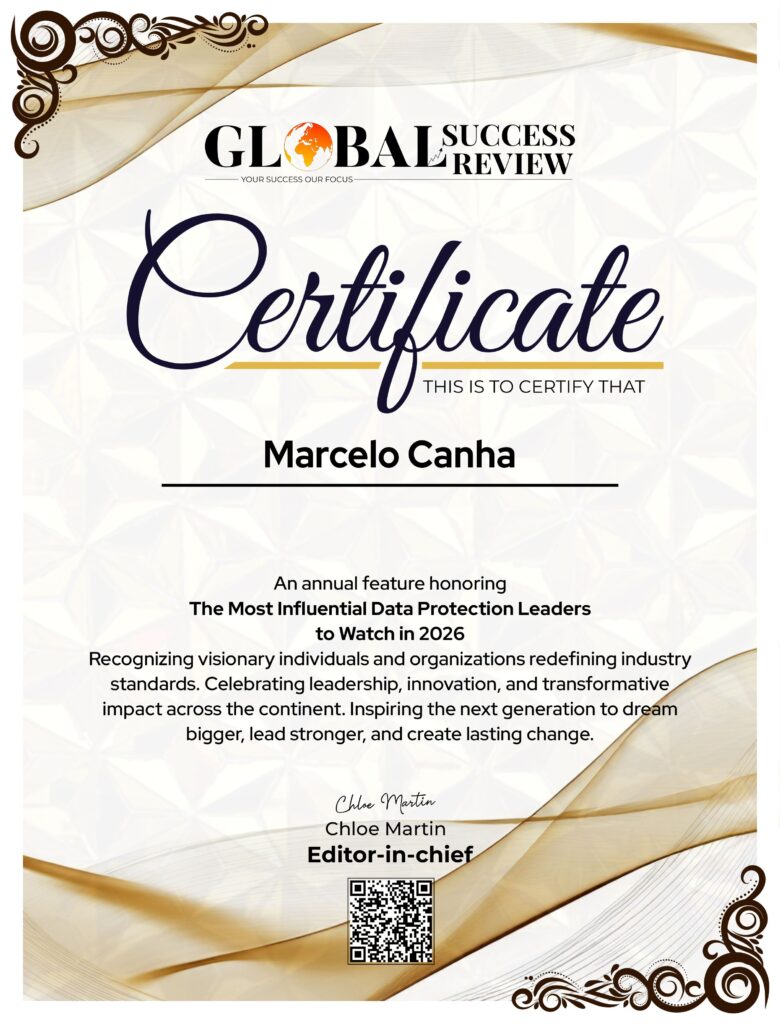
Being recognized as one of “The Most Influential Data Protection Leaders to Watch in 2026” is both a professional milestone and a reflection of Marcelo’s broader impact on the field.
For him, influence is not defined by visibility alone, but by the ability to create governance models that organizations can rely upon.
This recognition underscores the value of his approach, one that prioritizes execution, accountability, and real-world impact.
It also highlights the growing importance of privacy and AI governance as strategic disciplines within modern organizations.
Conclusion: Embedding Trust into the Future
As the world becomes increasingly data-driven, the importance of effective governance will only continue to grow.
Leaders like Marcelo Canha are shaping this future, not by reacting to change, but by building the frameworks that enable organizations to navigate complexity with confidence.
Through his work, Marcelo has demonstrated that privacy and AI governance are not obstacles to innovation, but essential foundations for sustainable progress.
By embedding trust into execution, he is helping organizations move beyond compliance and toward a future where data is not only powerful, but responsibly and ethically managed.
In a rapidly evolving digital landscape, this is not simply leadership – it is the kind of execution‑driven governance that will define trust, resilience, and responsible innovation in the years ahead.