Rebuilding Communities, Restoring Hope, and Redefining Affordable Housing in America
In the evolving landscape of American real estate, where market forces, policy challenges, and economic disparities often dictate the trajectory of development, a new class of leaders is emerging, leaders who are redefining success not merely by financial returns but by the lives they impact.
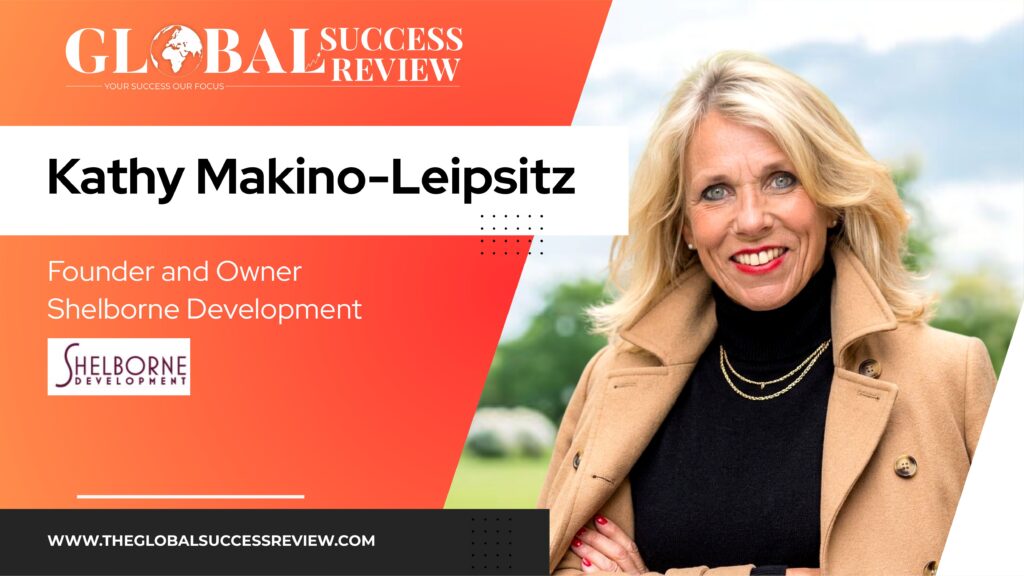
Among these visionaries stands Kathy Makino-Leipsitz, Founder and Owner of Shelborne Development, a leader whose work transcends the boundaries of traditional real estate. Her journey is not just about building structures, it is about rebuilding communities, restoring dignity, and reimagining the role of housing in shaping society.
Kathy’s story is deeply personal, profoundly impactful, and undeniably inspiring. It is a story that begins not in boardrooms or investment meetings, but in hardship, resilience, and a childhood that would ultimately shape her life’s mission.
A Childhood That Shaped a Mission
“A Childhood That Shaped a Mission” Section
For Kathy, affordable housing is not an abstract concept or a professional niche; it is a lived reality.
At the age of twelve, her life took an unexpected turn when her father became permanently disabled. What was once a stable, middle-class household was suddenly reduced to surviving on a disability check of just $379 per month. Overnight, financial security vanished, replaced by uncertainty and hardship.
But in the face of adversity, Kathy did something remarkable: she adapted.
Driven by necessity, she began finding creative ways to support her family. She melted crayons into candles and sold them door-to-door, wove potholders, collected newspapers for scrap, and even dug nightcrawlers to sell to fishermen. These early experiences were more than survival tactics; they were the foundation of her entrepreneurial spirit.
“I became an entrepreneur at twelve because life demanded it,” she reflects.
Yet Kathy says much of that drive came from the unwavering belief her parents instilled in her long before hardship ever struck.
“My parents always told me I could do anything I wanted in this life,” she says. “They made me believe no dream was impossible. That belief gave me the drive to work harder—not only to make my own dreams come true, but to help make their lives easier and better.”
She often reflects on a philosophy that continues to guide her today:
“We teach our children how to live by living out our dreams.”
“I thank my children every day for allowing me to live out mine.”
Beyond entrepreneurship, these experiences gave her something even more valuable a deep understanding of vulnerability, resilience, and the fragile nature of stability.
.
The Moment That Changed Everything
At just 19 years old, Kathy took a bold step that would define her future; she purchased her first duplex in a distressed neighborhood known as Norwayne.
What began as an investment opportunity quickly became a life-altering experience.
While collecting rent from a tenant, Kathy encountered a scene that would leave a lasting impression. Inside the home was a young child, sitting in a highchair, visibly neglected, his nose dripping into his oatmeal, his arms dirty from crawling on the floor, and the environment around him in disarray.
In that moment, Kathy realized something profound.
“Children have no choice in where they are born, but we have a choice in the environments we create for them.”
That realization became the cornerstone of her mission.
She began to see housing not just as shelter, but as the foundation for everything else: health, education, opportunity, and dignity. She recognized that nearly every major societal challenge, from healthcare and education to inequality and economic mobility, could be traced back, in some way, to housing stability.
And from that moment forward, her path was clear.
From Entrepreneur to Visionary Developer
Kathy’s early exposure to real estate began during her teenage years, babysitting for a couple who were real estate investors. This experience sparked her curiosity and introduced her to the possibilities within the industry.
At 16, she read Nothing Down, a book that opened her eyes to the power of real estate as a tool for financial independence and generational wealth.
But Kathy’s vision went beyond wealth creation.
By the time she purchased her first property at 19, she had already begun to see real estate as a platform for social change.
Over the years, she immersed herself in every aspect of the industry, including acquisitions, financing, construction, property management, and public-private partnerships. Each experience added to her understanding and strengthened her ability to navigate the complexities of development.
This journey culminated in the founding of Shelborne Development in 2000.
The Birth of Shelborne Development
The creation of Shelborne Development was not a coincidence, it was the result of years of learning, experience, and a clear vision.
Kathy, alongside her husband, a general contractor, recognized an opportunity to combine their expertise and focus on a shared mission: developing high-quality, affordable housing that could transform communities.
Their attention turned to Detroit, a city rich in history, yet burdened by decades of economic decline and disinvestment.
They began acquiring vacant and blighted buildings in historic neighborhoods such as Palmer Park, New Centre, and the East Jefferson Corridor.
But their approach was different.
They didn’t just see abandoned buildings, they saw potential.
They didn’t just see risk, they saw opportunity.
And they didn’t just aim to develop properties; they aimed to rebuild communities.
A Leadership Philosophy Rooted in Purpose
At the heart of Kathy’s work is a leadership philosophy that challenges conventional thinking.
“I believe financial success and social impact are not opposing forces; they are mutually reinforcing.”
This belief is the foundation of Shelborne Development’s approach.
Rather than viewing affordable housing as a compromise between profit and purpose, Kathy sees it as an opportunity to achieve both.
Her developments are designed to create value for investors while simultaneously improving the quality of life for residents. This dual focus ensures that projects are not only financially viable but also socially meaningful.
“Housing should be transformative, not merely transactional,” she emphasizes.
Transforming Blight into Beauty
One of Kathy’s most defining contributions to real estate has been her commitment to revitalizing overlooked communities.
In cities like Detroit, where entire neighborhoods have been neglected for decades, her work has been nothing short of transformative.
Her philosophy is simple yet powerful:
“Forgotten buildings and forgotten neighborhoods still have value, just like the people who live in them.”
Through her developments, Kathy has demonstrated that investment can restore not just structures, but also pride, identity, and hope.
When blighted buildings are transformed into vibrant, livable spaces, the impact extends far beyond the physical environment. It changes how communities see themselves and how others perceive them.
It creates momentum.
It sparks reinvestment.
And most importantly, it restores belief.
Mastering Complexity: The Financial Side of Affordable Housing
Affordable housing development is one of the most complex sectors in real estate, involving intricate financial structures, regulatory requirements, and multiple layers of funding.
Kathy’s ability to navigate this complexity has been a key factor in her success.
Rather than shying away from the challenges, she embraced them.
“I learned by doing,” she says.
From Low-Income Housing Tax Credits (LIHTC) to historic tax credits, bonds, and gap financing, Kathy immersed herself in every aspect of the process. She attended conferences, asked questions, studied transactions, and treated each project as an opportunity to learn.
This hands-on approach allowed her to master the financial tools necessary to bring visionary projects to life.
Overcoming Challenges in Underserved Communities
Developing in underserved communities comes with its own set of challenges, financing gaps, environmental issues, infrastructure limitations, and often skepticism from lenders and stakeholders.
For Kathy, the greatest challenge has been changing perceptions.
“The hardest part is convincing others to see possibility where they only see blight.”
This requires not just technical expertise, but also vision, courage, and persistence.
It requires believing in a project long before others do.
And it requires the resilience to continue pushing forward, even when faced with setbacks.
Palmer Park Square: Triumph and Trial
Among Kathy’s many achievements, one project stands out as both her greatest triumph and her most difficult challenge, Palmer Park Square.
This ambitious redevelopment involved the historic rehabilitation of six buildings in Detroit’s Palmer Park neighborhood.
The project was extraordinarily complex, involving multiple financing sources, tight timelines, and intricate coordination.
At one point, a major restructuring of the bond financing caused a six-month delay, putting immense pressure on the project timeline.
Despite these challenges, Kathy and her team pushed forward, delivering the project under demanding conditions.
But the journey was far from smooth.
A setback involving historic tax credit approvals resulted in a significant financial loss, ultimately leading to Kathy losing control of the development.
“It was one of the hardest moments of my career,” she admits.
Yet, despite the personal and financial challenges, the project was completed successfully.
The results were remarkable:
- 202 families returned to revitalized housing
- Six blighted buildings were transformed into vibrant residences
- The project received national recognition and multiple awards
Palmer Park Square became a symbol of what is possible when vision meets perseverance.
“It proved what thoughtful redevelopment can do for a community.”
Guiding Principles of Development
Shelborne Development operates on four core principles:
- Dignity in Design – Affordable housing should be beautiful and inspiring
- Long-Term Sustainability – Projects must be built to last
- Community Revitalization – Each development should spark broader change
- Resident Impact – Decisions should prioritize residents’ well-being
These principles ensure that every project goes beyond construction to create meaningful, lasting impact.
The Power of Historic Preservation
Historic preservation plays a central role in Kathy’s work.
Rather than demolishing old structures, she focuses on restoring them, preserving their architectural character while modernizing them for contemporary living.
This approach offers multiple benefits:
- Environmental sustainability through reduced waste
- Energy efficiency through adaptive reuse
- Cultural preservation of neighborhood identity
“Historic preservation creates vibrant communities rooted in history but prepared for the future,” Kathy explains.
Bridging the Housing Gap
As the demand for affordable housing continues to grow, Kathy believes that innovation is essential.
She advocates for:
- Stronger public-private partnerships
- Adaptive reuse of existing buildings
- Expanded tax credit programs
- Modernized zoning policies
- Increased incentives for sustainable development
Her message is clear:
“Affordable housing must be treated as economic infrastructure, not a niche policy issue.”
A Vision for the Future
Looking ahead, Kathy sees affordable housing becoming one of the most critical issues of the next decade.
As demand continues to outpace supply, housing affordability will play a central role in economic development and workforce stability.
She anticipates increased investment, policy reforms, and a greater emphasis on sustainability and innovation.
At the same time, she is excited about emerging trends such as:
- Mixed-income communities
- Advanced sustainable building systems
- Technology-driven property management
- Policy incentives for high-impact development
The Power of Collaboration
Kathy strongly believes that solving the housing crisis requires collaboration.
“Affordable housing is too complex for any one sector to solve alone.”
She advocates for:
- Early and transparent communication
- Streamlined approval processes
- Authentic community engagement
- Stronger partnerships between developers, governments, and communities
“It should not be this hard to do something so good,” she adds.
Values That Define Leadership
Throughout her journey, Kathy has been guided by a set of core values:
- Integrity
- Risk-taking
- Perseverance
- Empathy
- Vision
- Purpose
These values have sustained her through both success and adversity, shaping her approach to leadership and decision-making.
A Legacy Beyond Buildings
For Kathy, success is not measured by the number of units developed or the size of her portfolio.
It is measured by impact.
“I want my legacy to be measured by the lives changed.”
Her vision is to leave behind stronger communities, restored neighborhoods, and developments that continue to improve lives for generations to come.
But for Kathy, legacy extends far beyond the communities she builds.
She is the proud mother of two daughters, bonus mother to a son and daughter through her husband, and grandmother to four grandchildren.
“I am incredibly fortunate to have a family that has supported me and allowed me the time to pursue work that is so important to me,” she says. “None of this would be possible without them.”
For Kathy, the greatest legacy she hopes to leave is not only in the buildings she restores, but in the example she sets for future generations.
“If my children and grandchildren learn anything from my journey, I hope it is that purpose, perseverance, and passion can build a meaningful life.”
If her work inspires hope, creates stability, and gives communities a reason to believe in themselves again—while also teaching future generations to pursue their dreams fearlessly—then she considers her mission fulfilled.
Redefining Real Estate Leadership
Kathy Makino-Leipsitz represents a new paradigm in real estate leadership, one where purpose and profit are not in conflict, but in harmony.
Her work demonstrates that development can be a force for good, capable of addressing some of society’s most pressing challenges.
From a young girl helping her family survive to a leader transforming communities across the United States, her journey is a testament to resilience, vision, and the power of purpose-driven leadership.
As we look toward the future of real estate, leaders like Kathy are not just building structures; they are building possibilities.
And in doing so, they are reshaping not just skylines, but lives.