
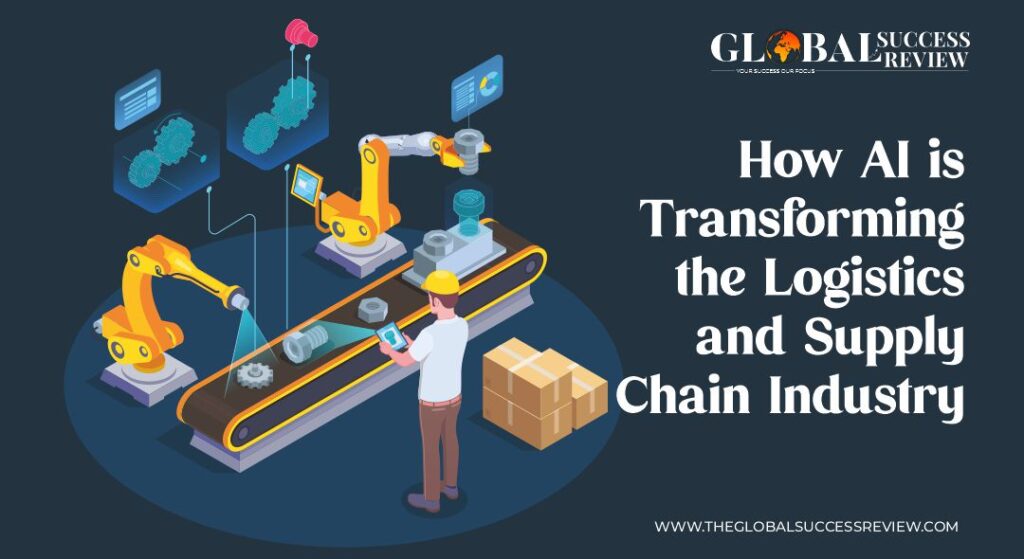
The logistics and supply chain industry is undergoing a profound transformation, driven by the rapid adoption of artificial intelligence (AI). In an era defined by speed, efficiency, and customer expectations, traditional supply chain models are no longer sufficient. Businesses are now turning to AI-powered solutions to optimize operations, reduce costs, and enhance decision-making. From predictive analytics to autonomous systems, AI is reshaping every aspect of logistics and supply chain management.
Enhancing Demand Forecasting and Planning
One of the most significant contributions of AI in logistics is its ability to improve demand forecasting. Traditional forecasting methods often rely on historical data and manual analysis, which can be limited and prone to errors. AI, on the other hand, uses advanced algorithms and machine learning to analyze vast datasets, including market trends, consumer behavior, weather patterns, and economic indicators.
This enables businesses to make more accurate predictions about future demand, helping them optimize inventory levels and avoid both overstocking and stockouts. As a result, companies can reduce waste, improve efficiency, and better meet customer expectations.
Optimizing Inventory Management
AI is revolutionizing inventory management by providing real-time insights and automation. Smart inventory systems can track stock levels, monitor product movement, and predict replenishment needs with remarkable accuracy.
Additionally, AI-powered systems can detect anomalies, such as unexpected demand spikes or supply disruptions, allowing businesses to respond proactively.
Improving Route Optimization and Delivery Efficiency
In logistics, transportation is one of the most critical and costly components. AI is playing a key role in optimizing routes and improving delivery efficiency. Advanced algorithms can analyze traffic conditions, weather data, fuel consumption, and delivery schedules to determine the most efficient routes in real time.
Companies are also exploring the use of AI-powered autonomous vehicles and drones, which have the potential to further revolutionize delivery systems.
Automating Warehouse Operations
Warehouses are becoming smarter and more efficient with the integration of AI and automation technologies. AI-powered robots and automated systems are now handling tasks such as picking, packing, sorting, and inventory tracking.
By automating repetitive and labor-intensive tasks, businesses can improve operational efficiency while allowing human workers to focus on more strategic activities.
Strengthening Supply Chain Visibility and Transparency
One of the major challenges in supply chain management is the lack of visibility across different stages. AI is addressing this issue by providing real-time tracking and end-to-end visibility. Enhanced visibility also helps in building trust with customers, as they can receive accurate updates about their orders and deliveries.
Enhancing Risk Management and Resilience
Supply chains are vulnerable to various risks, including natural disasters, geopolitical tensions, and market fluctuations. AI plays a crucial role in identifying and mitigating these risks.
By analyzing data from multiple sources, AI can predict potential disruptions and suggest alternative strategies. For example, if a supplier is likely to face delays, AI can recommend alternative suppliers or routes to minimize impact.
Personalizing Customer Experience
Customer expectations in logistics have evolved significantly, with demand for faster, more reliable, and personalized services. AI enables companies to meet these expectations by analyzing customer data and preferences.
Driving Sustainability in Logistics
Sustainability has become a key priority for the logistics industry, and AI is playing a vital role in achieving environmental goals. By optimizing routes, reducing fuel consumption, and improving resource utilization, AI helps lower carbon emissions.
AI also supports the adoption of green logistics practices by identifying energy-efficient solutions and minimizing waste. This not only benefits the environment but also enhances the reputation of businesses as responsible and sustainable organizations.
The Future of AI in Logistics
As AI technology continues to evolve, its impact on the logistics and supply chain industry will only grow stronger. Innovations such as predictive analytics, autonomous systems, and intelligent decision-making will further enhance efficiency and performance.
The integration of AI with other technologies, such as the Internet of Things (IoT) and blockchain, will create more connected and transparent supply chains. Businesses that embrace these advancements will gain a competitive edge in an increasingly dynamic and complex market.
Conclusion
AI is transforming the logistics and supply chain industry by enabling smarter, faster, and more efficient operations. From forecasting and inventory management to delivery optimization and risk mitigation, AI is driving innovation at every level.
In a world where efficiency and adaptability are key, AI stands as the driving force behind the future of logistics. 🚚🤖
[Apply for a Featured Profile on The Global Success Review Magazine] [Contact: theglobalsuccessreview.com]
