Redefining Human Capital as the Engine of Organizational Transformation
In today’s rapidly evolving business landscape, where digital disruption, workforce expectations, and economic pressures converge, organizations are being redefined from the inside out. While strategy, technology, and innovation often dominate headlines, the real differentiator lies deeper, within people, culture, and leadership.
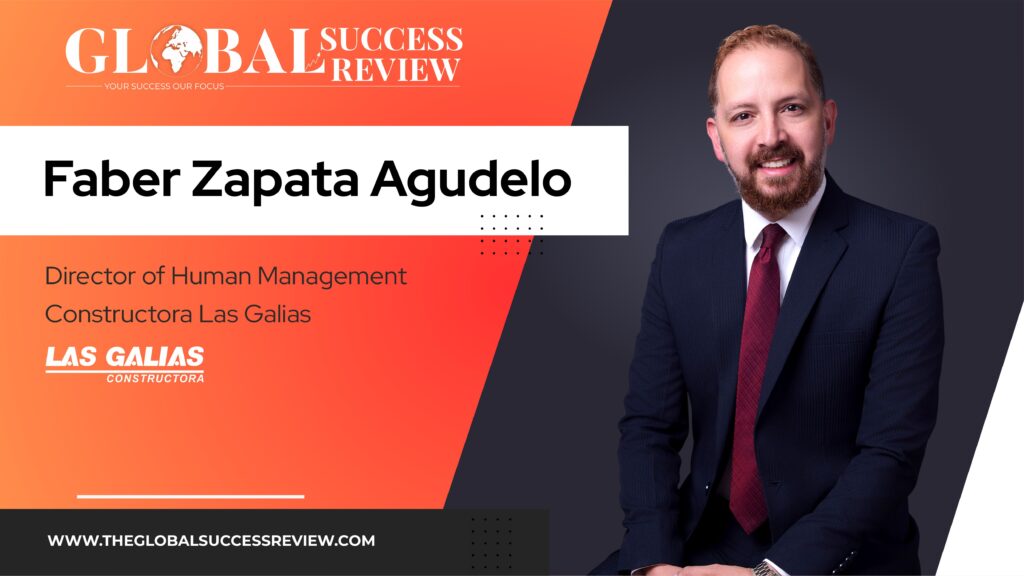
At the forefront of this transformation stands Faber Zapata Agudelo, a visionary HR leader whose work is reshaping how organizations in Colombia, and increasingly across Latin America, approach human capital. As a seasoned professional holding roles such as Director of Human Management, HR Manager, HR Business Partner (HRBP) and CHRO, Faber has built a reputation not just as an HR expert, but as a strategic architect of organizational success.
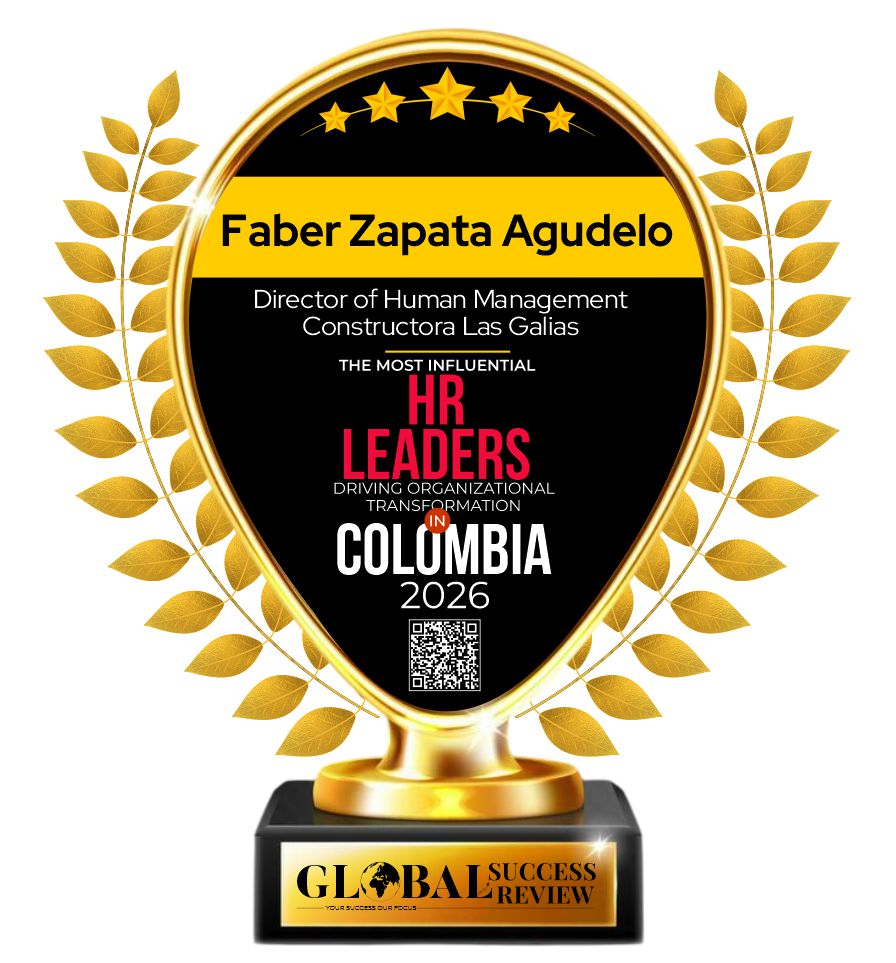
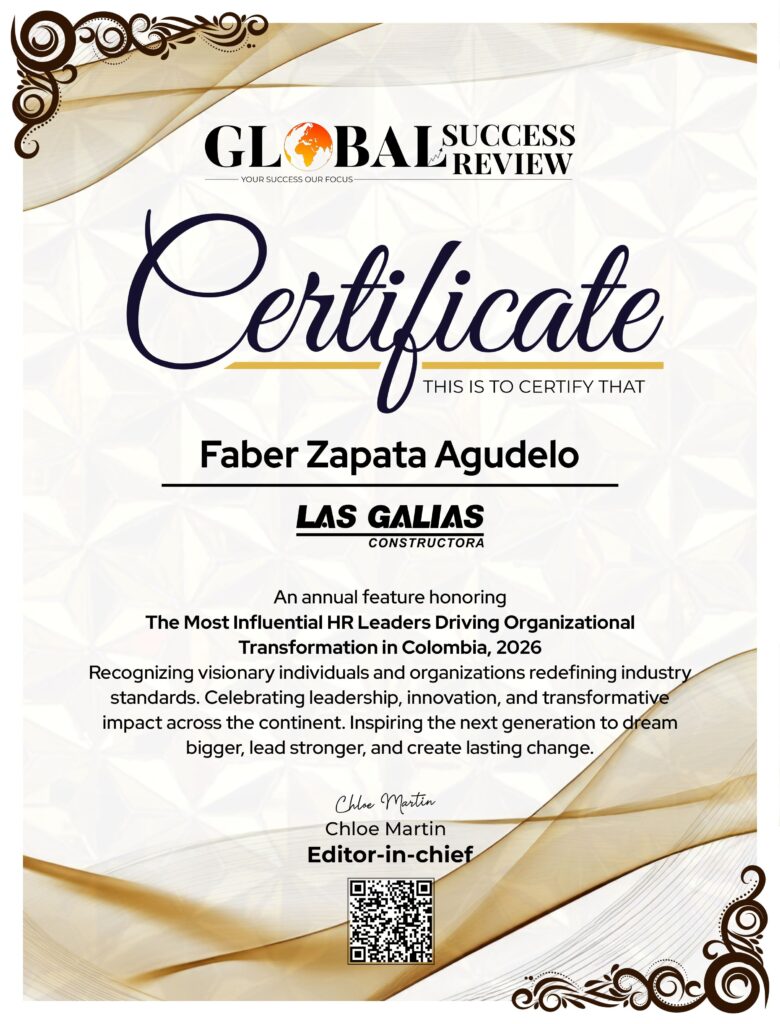
Recognized as one of “The Most Influential HR Leaders Driving Organizational Transformation in Colombia, 2026,” Faber represents a new generation of leaders who understand that sustainable business growth is not driven by systems alone, but by people empowered through purpose, culture, and data-driven decision-making.
From Strategy to People: A Purpose-Driven Beginning
Faber Zapata Agudelo’s journey into human resources was not accidental, it was deeply intentional and rooted in a powerful realization early in his career.
He recognized that organizations do not truly transform through strategy alone. Instead, transformation occurs through people, their behaviors, their engagement, and their alignment with purpose.
This insight became the foundation of his professional mission: to connect human potential with business performance and position talent management as a core driver of growth, innovation, and sustainability.
Rather than viewing HR as a support function, Faber saw it as a strategic lever, one capable of influencing organizational direction, enhancing competitiveness, and creating long-term value.
This mindset would go on to define his leadership philosophy and distinguish his approach in an increasingly complex business environment.
Leadership Philosophy: Where Culture Sustains What Strategy Builds
At the heart of Faber’s leadership philosophy lies a simple yet profound belief:
“Business is built through people, but sustained through culture.”
This perspective reflects a deep understanding that while strategies can initiate growth, it is culture that ensures continuity, resilience, and long-term success.
Faber leads with a balance of proximity, coherence, and strategic vision. His approach integrates three essential dimensions:
- Data-driven decision-making through People Analytics
- Human-centered leadership that prioritizes empathy and connection
- Purpose-driven strategy aligned with organizational goals
In practice, this means creating environments where employees are not only productive but also engaged, valued, and inspired to contribute meaningfully.
His leadership is not defined by hierarchy, but by influence, an influence built through trust, consistency, and the ability to translate complex business challenges into actionable people strategies.
Recognition as Responsibility: A Platform for Impact
Being recognized among Colombia’s most influential HR leaders is, for Faber, not merely an achievement, it is a responsibility.
He views such recognition as an opportunity to amplify a critical message: human resources must occupy a central role in business decision-making and organizational transformation.
For too long, HR has been perceived as an operational function. Faber challenges this narrative by positioning HR as a strategic partner, one that drives measurable outcomes and shapes the future of organizations.
This sense of responsibility fuels his commitment to advancing the HR profession, promoting innovation, and inspiring other leaders to embrace a more holistic and impactful approach to talent management.
Aligning People Strategy with Business Success
One of Faber’s greatest strengths lies in his ability to align people strategy with overarching business objectives.
He achieves this through a structured yet dynamic approach built on three key pillars:
1. Translating Business Strategy into Organizational Capabilities
Faber ensures that every business objective is supported by the right skills, structures, and behaviors. By identifying critical capabilities, he helps organizations build the internal strength needed to execute their strategies effectively.
2. Leveraging People Analytics
In an era where data is a strategic asset, Faber uses People Analytics to drive informed decision-making. By analyzing workforce trends, performance metrics, and engagement data, he enables organizations to anticipate challenges and act proactively.
3. Connecting Culture, Leadership, and Performance
Faber understands that culture is not separate from performance, it is a key driver of it. By aligning leadership behaviors with cultural values and performance goals, he creates cohesive systems that deliver sustainable results.
This integrated approach ensures that people strategy is not an isolated initiative but a core component of business success.
Core Values: The Foundation of Transformational Leadership
Faber’s decision-making is guided by a strong set of core values that define both his leadership style and organizational impact:
- Coherence: Ensuring alignment between words, actions, and strategy
- Integrity: Upholding ethical standards in all decisions
- Courage: Making bold choices in the face of uncertainty
- Sustainability: Focusing on long-term value creation
These values enable him to balance economic objectives with human, social, and reputational considerations, creating organizations that are not only profitable but also responsible and resilient.
A Career Defined by Evolution and Impact
Faber’s professional journey is a testament to continuous growth and adaptability.
From operational roles to strategic leadership positions such as HR Director, HRBP, CHRO, and Chief People Officer, each stage of his career has contributed to a deeper understanding of how organizations function.
One of the most significant lessons he has learned is that the true impact of HR emerges when it speaks the language of business.
This realization has shaped his ability to bridge the gap between talent management and organizational strategy, ensuring that HR initiatives are aligned with business priorities and deliver measurable results.
Learning from the Field: Leadership Beyond Hierarchy
Early in his career, Faber worked closely with frontline teams across various organizations. These experiences proved to be transformative.
They taught him that leadership is not defined by position, but by influence, connection, and the ability to inspire others.
By engaging directly with employees, understanding their challenges, and supporting their development, Faber developed a leadership style that is both practical and human-centered.
This foundation continues to inform his approach today, enabling him to build trust and foster collaboration across all levels of an organization.
Transforming Organizational Culture: A Complex Challenge
One of the most significant challenges Faber has faced is transforming traditional organizational cultures into modern, people-centric, and results-driven environments.
Such transformations require more than structural changes; they demand a shift in mindset, behaviors, and leadership practices.
Faber has successfully navigated these challenges by combining:
- Change management strategies
- Strong leadership alignment
- Clear and consistent communication
Through this approach, he has been able to create cultures that are agile, inclusive, and focused on performance, ultimately driving both employee engagement and business success.
A Defining Realization: People as Strategy
A pivotal moment in Faber’s career came when he observed the direct impact of people-centered decisions on organizational productivity and profitability.
This experience reinforced a powerful truth:
Human resources is not a support function; it is a strategic driver of business success.
This realization continues to shape his work, guiding his efforts to position HR as a central force in organizational transformation.
Measurable Impact: Linking People Metrics to Business Outcomes
One of Faber’s most impactful achievements has been the creation of organizational cultures where people metrics are directly connected to financial performance and sustainability.
These metrics include:
- Organizational climate
- Employee Net Promoter Score (eNPS)
- Turnover and absenteeism
- Workplace safety and accident rates
- Compensation competitiveness
- Mental health and well-being
- Performance outcomes
By integrating these indicators into business strategy, Faber has demonstrated that investing in people is not only the right thing to do, it is also a key driver of profitability and long-term success.
Driving HR Transformation Through Innovation
As organizations continue to evolve, Faber is focused on several key priorities that define the future of HR:
- Integrating Artificial Intelligence into talent management
- Strengthening conscious and creative leadership
- Building high-performance organizational cultures
- Expanding the use of People Analytics
These initiatives reflect his commitment to innovation and his belief that HR must continuously adapt to remain relevant and impactful.
People Analytics: From Data to Insight
For Faber, data is not just information, it is a strategic tool for transformation.
By analyzing performance, engagement, leadership, and productivity, he enables organizations to move from reactive decision-making to proactive strategy.
This predictive approach allows leaders to anticipate challenges, identify opportunities, and make informed decisions that drive better outcomes.
Artificial Intelligence: Enhancing Human Potential
Faber views Artificial Intelligence not as a replacement for talent, but as an enabler of human potential.
AI allows organizations to:
- Personalize employee experiences
- Improve decision-making processes
- Enhance efficiency and productivity
By leveraging AI, leaders can focus on what truly matters: connecting with people, inspiring teams, and driving meaningful change.
Building a Culture of Engagement and Performance
Creating a strong organizational culture requires intentional effort and consistent action.
Faber focuses on three key pillars:
- Leadership: Developing leaders who embody organizational values
- Communication: Ensuring transparency and alignment
- Employee Experience: Creating meaningful and engaging work environments
Through these elements, he builds cultures that are not only high-performing but also inclusive and supportive.
A Success Story: Transforming Business Outcomes
One notable example of Faber’s impact involves a comprehensive HR strategy that addressed key organizational challenges.
By focusing on culture, leadership, and talent analytics, his initiatives achieved:
- Reduced workplace risks and accidents
- Lower absenteeism rates
- Improved organizational climate
- Increased productivity
These results demonstrate the tangible value of effective HR leadership and its ability to drive business success.
The Future of HR in Colombia
Looking ahead, Faber envisions a significant transformation in the HR landscape.
Over the next five years, HR will become:
- More strategic
- More digital
- More predictive
It will play a central role in areas such as sustainability, artificial intelligence, and cultural transformation.
Emerging Trends Shaping the Workplace
Faber identifies several key trends that are redefining organizational culture:
- AI-driven talent management
- Focus on well-being and mental health
- Hybrid work models
- Sustainability as a strategic priority
- Employee advocacy and employer branding
These trends highlight the evolving role of HR as a driver of innovation and organizational success.
Well-being as a Competitive Advantage
In today’s environment, employee well-being is no longer optional; it is a strategic necessity.
Organizations that prioritize well-being create stronger engagement, higher productivity, and better business outcomes.
Faber emphasizes that taking care of people ultimately means taking care of the business.
Overcoming Barriers to Transformation
Despite the opportunities, organizations face several challenges in implementing HR transformation:
- Resistance to change
- Lack of consistent leadership
- Disconnect between HR and business strategy
- Limited use of data
Addressing these barriers requires a combination of leadership, communication, and strategic alignment.
Defining Future-Ready HR Leadership
For Faber, the leaders of tomorrow must possess a unique combination of skills and perspectives.
They must be able to:
- Integrate strategy, technology, and humanity
- Build strong organizational cultures
- Drive measurable results
- Anticipate change
Ultimately, future-ready HR leaders are not just managers; they are architects of transformation.
Awards and Recognition: A Testament to Excellence
Faber’s impact has been recognized through numerous prestigious awards, including:
- Top HR Manager Colombia (2026, 2025, 2024)
- Top HR Manager LATAM (2025 & 2024)
- Top HR Leader in Latin America – Manage HR Magazine (2025)
- HR Influencer (2024, 2023, 2021)
- Most Innovative Business Development Leaders to Watch (2026)
- Corporate Social Responsibility Award – CAMACOL (2023)
These accolades reflect not only his professional achievements but also his influence on the broader HR community.
A Vision for the Future
Faber Zapata Agudelo’s vision is clear and compelling:
The future of organizations will not be defined by the technology they adopt, but by how they develop their people.
This belief underscores his commitment to transforming HR into a strategic force, one that drives innovation, builds culture, and creates sustainable value.
Conclusion: Transforming Organizations Through People
Faber Zapata Agudelo represents a new era of HR leadership, one that goes beyond traditional boundaries to shape the future of work.
His journey, philosophy, and impact serve as a powerful reminder that true transformation begins with people.
As organizations navigate an increasingly complex world, leaders like Faber will continue to play a critical role in defining success, not just in terms of financial performance, but in the creation of meaningful, sustainable, and human-centred organisations.