Driving the Future of Critical Care Innovation Across India & South Asia
In the rapidly evolving world of healthcare and medical technology, leadership today demands far more than commercial expertise. It requires scientific understanding, strategic foresight, operational excellence, and above all, a deep commitment to improving patient lives. Across India and South Asia, where healthcare systems continue to evolve under increasing clinical demands, few leaders embody this balance as effectively as Shalinder Bernard.
As the Business Director & Country Head – India & South Asia at Jafron Biomedical, Shalinder Bernard has emerged as one of the region’s most influential voices in advanced blood purification, hemoadsorption, and critical care innovation. His leadership reflects a rare ability to bridge clinical purpose with strategic business execution, helping transform emerging healthcare ecosystems through advanced technologies, drive Clinical Excellence, and sustainable healthcare partnerships.
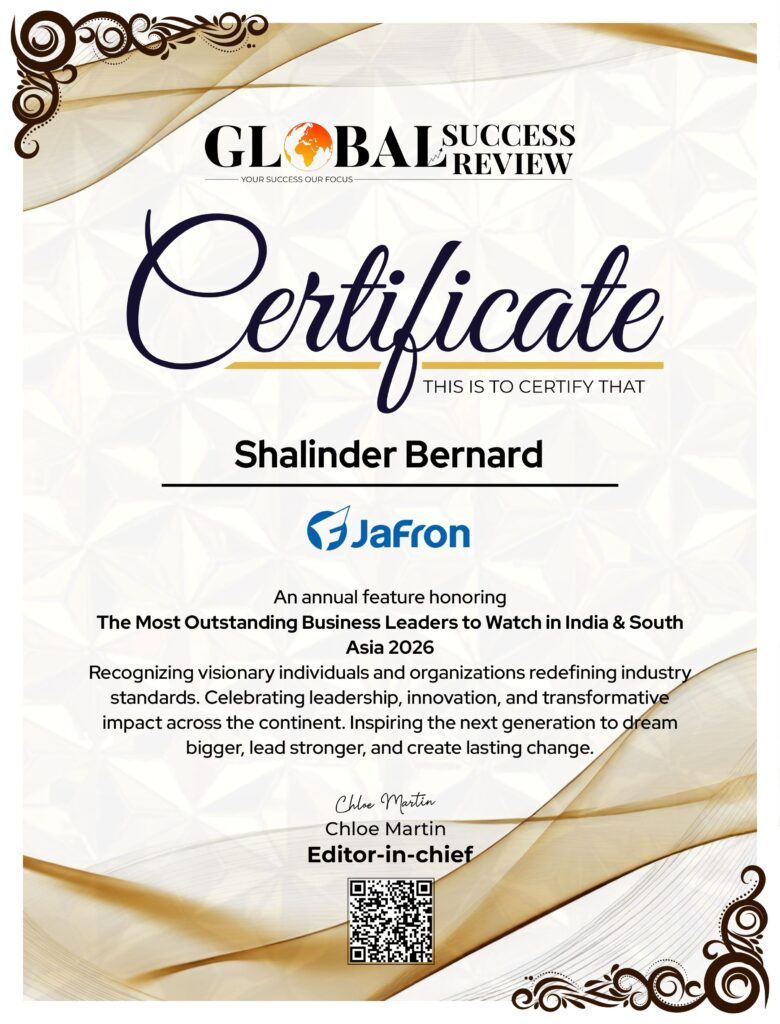
Recognized in The Global Success Review Magazine as one of “The Most Outstanding Business Leaders to Watch in India & South Asia 2026,” Bernard represents a new generation of healthcare leaders who view innovation not merely as technological advancement, but as a pathway to measurable patient impact and long-term healthcare transformation.
His journey is defined by purpose-driven leadership, deep clinical engagement, and a relentless commitment to strengthening critical care delivery across diverse and rapidly changing healthcare markets.
Leadership Rooted in Purpose
For Shalinder Bernard, leadership in healthcare has never been about titles or commercial achievements alone. It has always been about responsibility, the responsibility to improve clinical outcomes, empower healthcare professionals, and bring meaningful innovation closer to the bedside.
His inspiration for entering the healthcare and medical devices industry emerged early in his career, when he witnessed firsthand how critical and time-sensitive interventions could dramatically alter patient survival and recovery outcomes.
Those experiences shaped a foundational belief that continues to define his leadership philosophy today: healthcare leadership must ultimately serve patients.
“Healthcare is one of the few industries where business decisions directly influence human lives,” Bernard explains. “That reality creates a profound responsibility for leaders to think beyond growth metrics and focus on meaningful clinical impact.”
What particularly drew him toward blood purification and critical care therapies was the enormous unmet need within intensive care environments. In critical care settings, clinicians often operate under immense pressure, managing highly complex cases with limited time and resources. Bernard recognized early that innovation in extracorporeal therapies could significantly enhance clinicians’ Ability to manage inflammatory conditions, sepsis, liver dysfunction, multi-organ failure and acute poisoning more effectively
Rather than focusing solely on commercial opportunity, he saw a larger mission, helping bridge the gap between cutting-edge technology and practical, real-world clinical implementation across emerging healthcare markets.
That mission would eventually become central to his leadership journey.
Building a Vision Beyond Transactions
One of the defining characteristics of Shalinder Bernard’s leadership style is his belief that sustainable healthcare growth cannot be built through transactional business models alone.
Instead, he focuses on creating ecosystems of trust, collaboration, scientific engagement, and long-term clinical value.
Throughout his career, Bernard has consistently emphasized that healthcare partnerships must extend beyond product adoption. Successful healthcare transformation requires Strong alignment between clinicians, paramedics, healthcare institutions, channel partners and industry leaders.
This philosophy has shaped the way he approaches every aspect of leadership.
“At Jafron India & SA, our mission ‘We Bring Back Life’ is not simply a statement,” Bernard says. “It guides every strategic decision, clinical initiative, and partnership we pursue.”
His leadership philosophy rests on three key pillars:
Purpose-Driven Impact
Every initiative must ultimately contribute to better patient outcomes and stronger healthcare systems.
People Empowerment
High-performance organizations are built by empowering people with trust, ownership, accountability, and opportunities for growth.
Executional Excellence
Vision alone is insufficient without disciplined execution, operational agility, and measurable outcomes.
This balanced leadership model has enabled Bernard to successfully navigate the highly complex healthcare landscapes of India and South Asia, where healthcare infrastructure, clinical awareness, reimbursement systems, and regulatory frameworks vary significantly across markets.
Leading Healthcare Transformation Across South Asia
As Business Director & Country Head for India & South Asia, Bernard oversees one of the most strategically important regions for Jafron Biomedical.
India and South Asia represent a rapidly expanding healthcare ecosystem with enormous growth potential. Rising disease burden, increased healthcare investments, growing ICU infrastructure, and expanding awareness around advanced therapies are transforming the region into a major hub for critical care innovation.
At the same time, the region presents considerable complexity.
Healthcare systems across South Asia differ widely in terms of infrastructure maturity, clinical adoption patterns, reimbursement capabilities, regulatory structures, and operational readiness.
Successfully expanding advanced therapies across such a diverse landscape requires far more than conventional commercial leadership.
It requires adaptability.
It requires scientific credibility.
And most importantly, it requires trust.
Bernard has approached this challenge by building strong regional ecosystems centered on Clinical Excellence, evidence-based adoption, local partnerships, and operational reliability.
One of his key strategic priorities has been accelerating awareness and clinical adoption of hemoadsorption and blood purification therapies across India, and neighboring South Asian markets.
These therapies play an increasingly important role in managing severe inflammatory conditions, cytokine storms, septic shock, acute kidney injury, liver dysfunction, multi-organ failure and acute poisoning.
However, introducing advanced extracorporeal therapies into emerging healthcare markets involves significant challenges.
Clinician awareness may initially be limited. Hospitals often require operational support and training. Regulatory pathways can vary considerably across countries. Infrastructure constraints may slow therapy integration.
Bernard recognized early that overcoming these barriers required a clinically driven strategy rather than a purely commercial one.
Advancing Clinical Education and Scientific Engagement
A major cornerstone of Bernard’s regional leadership has been his focus on Drive Clinical Excellence and scientific collaboration.
He strongly believes that sustainable adoption of advanced healthcare technologies can only occur when clinicians trust both the science and the intent behind the therapy.
As a result, he has consistently prioritized evidence-based engagement over transactional product promotion.
Under his leadership, Jafron India & SA has expanded clinician education platforms, scientific workshops, real-world evidence programs, and hands-on therapy training initiatives across the region.
These efforts have helped build stronger awareness around extracorporeal blood purification therapies while enabling clinicians to better integrate advanced treatment pathways into routine critical care practice.
Bernard’s approach emphasizes collaboration with key opinion leaders, academic institutions, critical care specialists, nephrologists, hepatologists, perfusion teams, and healthcare societies to create sustainable long-term clinical ecosystems.
His philosophy is simple:
When healthcare professionals understand the clinical value and real-world impact of innovation, adoption naturally becomes more sustainable and meaningful.
This scientific-first approach has played a critical role in strengthening institutional trust and expanding therapy acceptance across multiple healthcare systems.
The Growing Importance of Hemoadsorption in Critical Care
One area where Bernard has been particularly influential is the advancement of hemoadsorption therapies within South Asia’s critical care ecosystem.
Hemoadsorption technologies are increasingly recognized for their ability to support clinicians in managing severe Inflammatory responses by removing cytokines, bilirubin, protein bound poisons, and other harmful mediators from the bloodstream.
These therapies are becoming increasingly relevant in managing:
- Sepsis and septic shock
- Cytokine storm syndromes
- Acute liver failure
- Acute Poisoning
- Multi-organ dysfunction syndrome
- Severe inflammatory conditions
- Advanced nephrology and critical care complications
Bernard believes these technologies represent a major evolution in modern critical care medicine.
“Innovation in critical care is no longer only about treating symptoms,” he explains. “It is about supporting the body’s systemic response more effectively and enabling clinicians to intervene earlier and with greater precision.”
At Jafron Biomedical, innovation efforts continue to focus on advancing next-generation adsorption technologies that combine therapeutic efficiency, safety, biocompatibility, and accessibility.
What makes Bernard’s approach particularly impactful is his focus on democratizing access to these innovations across emerging healthcare markets. He believes advanced therapies should not remain confined to a small number of elite healthcare institutions. Instead, innovation must become scalable, affordable, and accessible across broader healthcare systems.
Balancing Innovation with Accessibility
One of the greatest challenges facing healthcare leaders today is ensuring that advanced medical technologies remain affordable and accessible across developing regions.
Bernard approaches this challenge with a highly pragmatic and patient-centered mindset.
“Innovation creates true impact only when it reaches the patients who need it most,” he says.
Rather than pursuing technology for its own sake, Bernard focuses on contextualizing innovation according to local healthcare realities.
That means creating scalable healthcare models capable of delivering meaningful clinical outcomes without imposing unsustainable economic burdens on hospitals or patients.
His strategy emphasizes:
- Sustainable Healthcare Impact
- Value-Driven Therapy Adoption
- Operational Excellence
- Integrated Market Access Ecosystem
- Regional Centers of Excellence Network
- Clinical Capability Development
He also believes that affordability should never be treated as an afterthought in healthcare innovation.
Instead, it must be integrated into strategic planning from the beginning.
This balanced approach has helped strengthen therapy accessibility across multiple healthcare markets while maintaining global quality standards and drive Clinical Excellence.
Leadership During Critical Healthcare Challenges
One of the most defining chapters of Bernard’s leadership journey emerged during the post-pandemic critical care era, a period marked by a surge in severe inflammatory conditions and multi-organ dysfunction cases across healthcare institutions throughout the region.
As healthcare systems faced extraordinary operational and clinical pressures, the demand for advanced extracorporeal blood purification therapies accelerated significantly. Clinicians required not only timely access to innovative treatment modalities but also dependable clinical updates and technical support to navigate rapidly evolving patient needs.
Under Bernard’s leadership, his team demonstrated exceptional operational excellence, ensuring uninterrupted therapy availability, agile supply chain coordination, responsive technical support, and continuous clinical engagement across multiple geographies during one of the most challenging periods in recent healthcare history.
This coordinated effort enabled numerous leading tertiary care centers to successfully integrate hemoadsorption therapy into critical care treatment pathways, strengthening institutional capabilities and expanding access to advanced therapeutic interventions. The initiative reinforced Jafron’s commitment to clinical innovation, physician partnership, and sustainable healthcare impact across the region.
Clinical awareness expanded considerably across India and neighboring South Asian regions. Healthcare professionals gained greater confidence in advanced blood purification therapies.
Most importantly, critically ill patients gained access to additional life-supporting therapeutic options during a period of enormous healthcare pressure.
For Bernard, this period reinforced an important leadership principle:
“Sustainable healthcare innovation succeeds only when clinical value, operational excellence, and stakeholder trust evolve together.”
A Leader Focused on Long-Term Impact
Despite his growing recognition across the healthcare industry, Bernard consistently maintains a long-term perspective centered on ecosystem development rather than short-term achievements.
He views leadership as the ability to create sustainable healthcare transformation that extends beyond quarterly business performance.
This includes:
- Strengthening clinician confidence and therapeutic decision-making
- Expanding equitable patient access to innovative therapies
- Accelerating real-world evidence and clinical knowledge generation
- Strengthening multidisciplinary healthcare capabilities
- Fostering enduring and high-impact healthcare partnerships
- Cultivating the next generation of healthcare leaders and change-makers
His leadership style reflects both strategic discipline and emotional intelligence. He places strong emphasis on empowering teams through trust, accountability, and continuous learning.
“Sustainable growth is built by creating more leaders,” Bernard explains.
Within his teams, he encourages intellectual curiosity, cross-functional collaboration, operational ownership, and innovation-driven thinking.
He believes high-performance cultures emerge when individuals understand how their work contributes to broader healthcare impact.
The Future of Healthcare in India & South Asia
Looking ahead, Bernard sees enormous transformation potential across India and South Asia’s healthcare ecosystem over the next five years. He believes the region is gradually shifting toward more value-based, patient-centric, and outcome-driven healthcare models.
Several trends particularly excite him:
Precision Medicine
Healthcare is moving toward individualized therapeutic strategies based on biomarkers, patient biology, and real-time physiological data.
Artificial Intelligence in Healthcare
AI-enabled diagnostics, predictive analytics, ICU monitoring systems, and decision-support platforms are increasingly enhancing clinical precision and efficiency.
Advanced Extracorporeal Therapies
Blood purification technologies, cytokine modulation systems, and organ support therapies are reshaping critical care treatment pathways.
Digital Health Ecosystems
Remote monitoring, data-driven clinical insights, and integrated healthcare systems are improving healthcare delivery efficiency.
Localized Healthcare Innovation
Regional manufacturing initiatives and localized clinical evidence generation will strengthen healthcare accessibility across emerging markets.
Bernard believes the organizations that will lead this next phase of healthcare transformation are those capable of combining innovation, scientific credibility, operational scalability, and patient-centric execution.
Defining Future-Ready Healthcare Leadership
For Bernard, impactful leadership in healthcare today requires a combination of strategic agility, scientific understanding, empathy, and executional discipline.
Modern healthcare leaders must be capable of navigating increasingly complex intersections between technology, regulation, economics, and patient care.
But perhaps most importantly, they must remain deeply connected to purpose.
“Healthcare leadership is ultimately measured by impact,” Bernard says. “Not only by business performance, but by the number of lives positively influenced through the work we do.”
He believes future-ready leaders must focus on:
- Clinical credibility
- Innovation with integrity
- Collaborative ecosystem building
- Ethical growth
- Talent development
- Patient-centric decision-making
- Sustainable healthcare transformation
This philosophy has become central to his broader vision for the future of healthcare leadership.
Building a Lasting Legacy
When asked about the legacy he hopes to build, Bernard’s response reflects the same sense of purpose that has guided his entire career.
He hopes to be remembered as someone who helped accelerate access to life-saving innovations while strengthening healthcare systems across emerging markets.
But beyond technology and business growth, his larger aspiration is to help shape a healthcare ecosystem rooted in collaboration, trust, scientific excellence, and patient impact.
“I want to contribute toward building organizations that are respected not only for market leadership,” he explains, “but for setting benchmarks in Clinical Excellence, ethical growth, and meaningful patient outcomes.”
He also hopes to inspire future healthcare leaders to combine business excellence with empathy, integrity, and long-term vision.
For Bernard, true leadership is not defined solely by scale or revenue. It is defined by the trust earned from clinicians. The resilience built within teams. The healthcare ecosystems strengthened over time. And ultimately, the patients whose lives are improved through innovation.
A Vision That Continues to Expand
Today, as Shalinder Bernard continues to lead the expansion of advanced blood purification and critical care therapies across South Asia, his influence extends far beyond organizational leadership.
He represents a broader movement within global healthcare, one where innovation is increasingly aligned with accessibility, scientific integrity, and patient-centered care.
Under his leadership, Jafron Biomedical continues to strengthen its position as a trusted partner in advancing critical care innovation across India and South Asia.
More importantly, Bernard continues to demonstrate what modern healthcare leadership truly looks like:
Purpose-driven.
Clinically grounded.
Innovation-led.
And deeply committed to improving lives.
As healthcare systems across the region evolve toward a more advanced, connected, and patient-centric future, leaders like Shalinder Bernard are helping shape that transformation, not only through technology, but through vision, collaboration, and enduring impact.
For The Global Success Review Magazine, his journey stands as a powerful reflection of what it means to lead responsibly in one of the world’s most important industries.
And in an era where healthcare innovation increasingly defines the future of human wellbeing, his story is only beginning.