The Most Innovative Materials Engineering Leaders to Watch in 2026
In healthcare, some of the most consequential innovations are not always visible. They exist within the polymers, plastics, coatings, processing technologies, material specifications, sterilization strategies, and engineering decisions that quietly determine whether a medical device can perform safely and reliably.
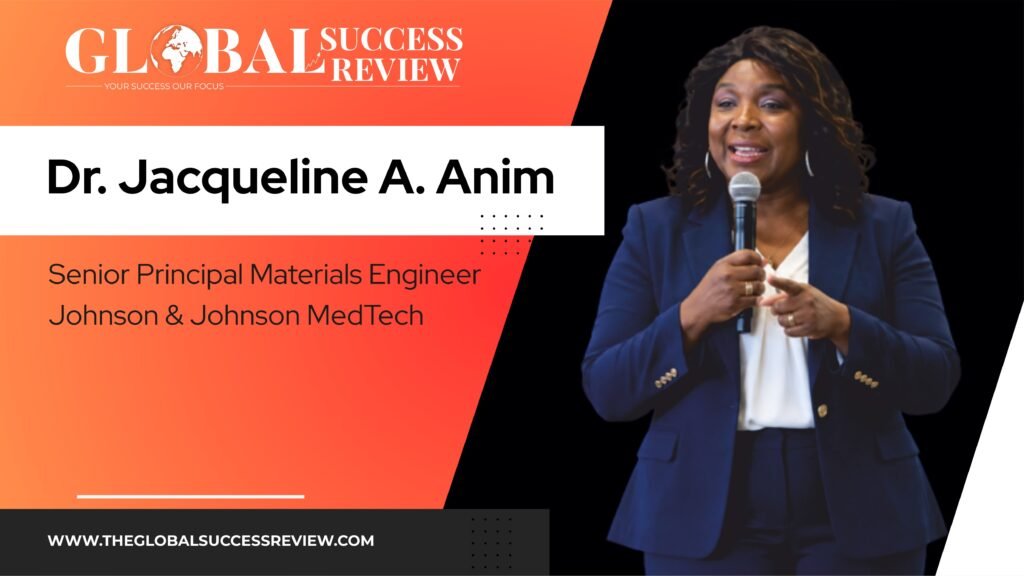
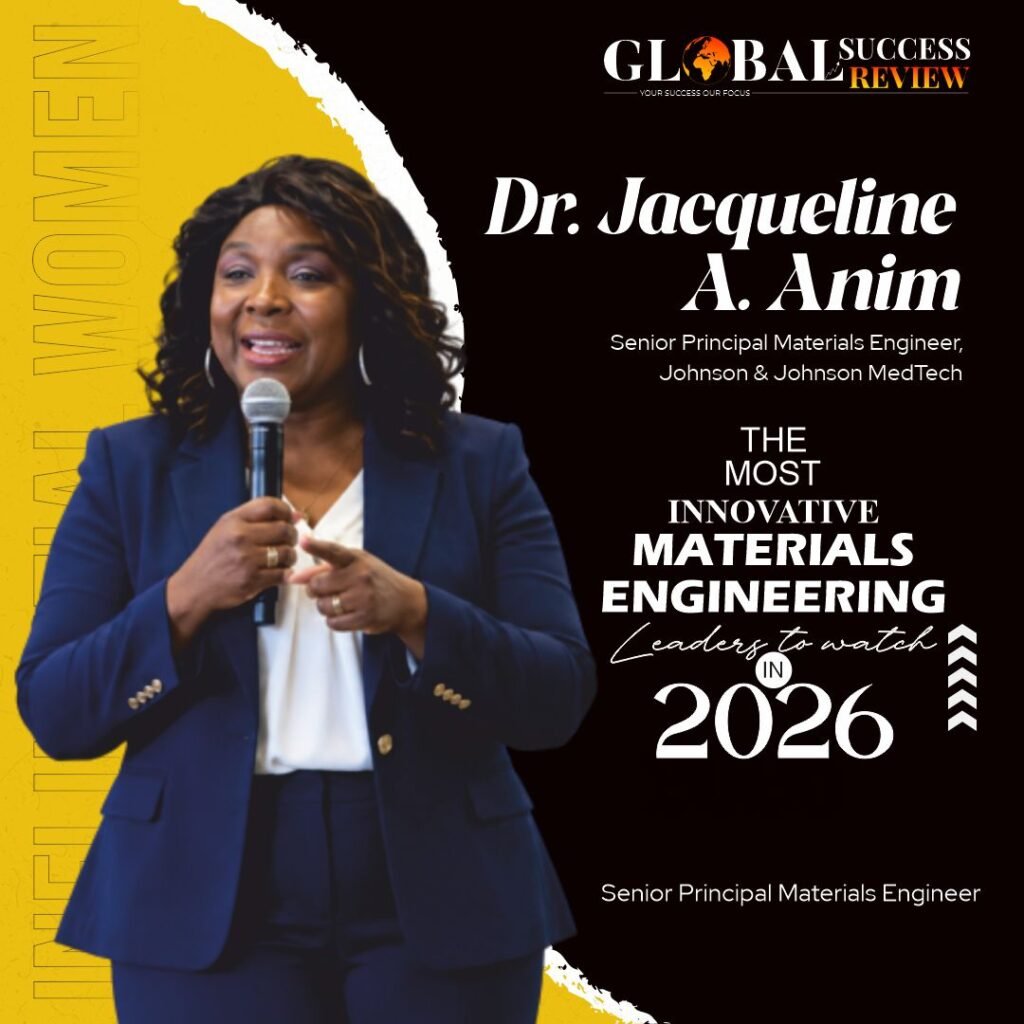
At this critical intersection of materials science and healthcare innovation stands Dr. Jacqueline A. Anim, Senior Principal Materials Engineer and cross-sector Subject Matter Expert for medical polymers at Johnson & Johnson MedTech. Her career represents a remarkable journey across industries, disciplines, and technologies, from automotive materials engineering and polymer processing to advanced medical-device materials and industry-wide collaboration.
With a career spanning more than three decades, Dr. Anim has developed a distinctive perspective: meaningful materials innovation is not simply about discovering a better material. It is about understanding how chemistry, processing, design, manufacturing, quality, regulation, supply chains, sterilization, sustainability, and clinical needs must work together to create solutions that ultimately serve patients.
Her professional philosophy can be captured in a simple but powerful belief: engineers are creators. They are trained to take an unmet need or complex problem and transform it into something that did not previously exist.
For Dr. Anim, that creative process begins with curiosity and imagination, but reaches its full potential through collaboration.
From Automotive Innovation to Medical Technology
Dr. Anim’s materials engineering journey began in 1994, during the final semester of her graduate studies, when she accepted an internship at General Motors’ Delphi manufacturing and engineering facility in Vandalia, Ohio.
Her initial assignment focused on optimizing the PVC skin extrusion process used for automotive instrument panels, particularly reducing scrap and improving manufacturing efficiency. What began as an internship became the foundation for a 15-year career in automotive materials engineering.
As a Paint and Processing Engineer, Dr. Anim worked on instrument-panel materials, construction technologies, polymer processing, coatings, and manufacturing processes. Her work contributed to several notable developments, including non-PVC instrument-panel skin technology, cast-TPO formed skin materials, recyclable skin systems, waterborne paint systems, and a closed-loop skin-forming process designed to reduce manufacturing scrap.
One particularly challenging project required integrating multiple technologies into a single manufacturing system. TPO material had to be cryogenically ground into powder, cast into a heated tool, processed into the desired structure, washed to remove mold-release residues, and robotically coated with a waterborne paint system.
The experience reinforced a principle that would remain central to Dr. Anim’s career: materials engineering becomes most powerful when chemistry, processing, manufacturing, automation, and product design are considered together.
Her automotive experience also provided exposure to intellectual property development and patented innovations involving material compositions and plastics applications designed to improve styling, durability, performance, and reliability.
In 2009, she made a significant transition into the medical-device industry, joining Ethicon, now part of Johnson & Johnson MedTech.
The change in industry brought a new level of purpose to her materials expertise.
In medical technology, material performance is directly connected to patient safety, product reliability, biological compatibility, sterilization, manufacturing consistency, and clinical functionality. The stakes are fundamentally different.
Today, Dr. Anim applies her expertise across medical polymers, plastics, materials innovation, technical consultancy, material selection, materials data management, and standardization.
Her journey demonstrates the value of cross-industry knowledge transfer: expertise developed in one sector can become a catalyst for innovation in another.
Engineering With the Patient at the Center
Dr. Anim’s leadership philosophy begins with imagination.
She believes engineers should cast their “net of imagination” as widely as possible before narrowing toward a solution. Challenging conventional thinking, asking “what if?”, and exploring possibilities beyond the immediate boundaries of a discipline are essential elements of innovation.
But imagination alone is not enough.
Collaboration transforms ideas into solutions.
Materials challenges rarely belong to one discipline. The answer may emerge from chemistry, materials science, processing, manufacturing, design, data, regulatory science, or another technical field entirely.
This is why Dr. Anim places significant emphasis on diversity of thought.
Her approach recognizes that the strongest engineering environments are those where different perspectives can be introduced, examined, questioned, and combined constructively.
In medical-device engineering, however, innovation must also be balanced with responsibility.
A tiny dimensional variation or seemingly minor material difference can influence product performance and quality. Engineering decisions therefore require precision, discipline, and a continuous awareness of their potential impact on patients.
For Dr. Anim, leadership means creating an environment where engineers can imagine boldly, collaborate openly, challenge convention responsibly, and keep the patient at the center of every decision.
Creating a Common Language for Medical Materials
One of the most influential chapters of Dr. Anim’s leadership journey has been her involvement in the creation of the North American Medical Grade Materials Consortium (MGMC).
The initiative addresses an industry-wide challenge: how to create greater alignment, transparency, consistency, and standardization around medical-grade materials.
Today, the consortium brings together more than 50 member companies and a broad community of technical experts, material specialists, manufacturers, suppliers, and industry professionals.
For Dr. Anim, the importance of MGMC goes beyond creating another professional forum.
It demonstrates that some of the industry’s most complex challenges cannot be solved effectively by one organization acting alone.
Medical-material standardization can help establish clearer expectations around material identification, characterization, documentation, qualification, supplier communication, and lifecycle management.
The objective is to help create a more transparent ecosystem in which engineers can identify appropriate materials more efficiently and stakeholders can operate with a stronger common understanding.
Dr. Anim believes leadership is not always about personally having the answer. Sometimes, leadership means creating the environment in which the right people can come together to discover the answer.
That philosophy has become increasingly important as the medical-device industry confronts complex questions surrounding material obsolescence, supply continuity, regulatory expectations, sterilization, sustainability, and emerging technologies.
Beyond the Datasheet: Rethinking Material Selection
One of Dr. Anim’s strongest messages to the medical-device industry is that selecting a material should never be reduced to comparing numbers on a technical datasheet.
The “best” material is not necessarily the material with the highest strength, greatest chemical resistance, or most advanced specification.
The right material is the one that appropriately balances the requirements of the intended application.
These may include mechanical, thermal, chemical, electrical, biological, processing, sterilization, reliability, regulatory, supply-chain, and lifecycle considerations.
Dr. Anim describes medical-material selection as a performance hierarchy in which requirements become increasingly demanding as the material moves closer to prolonged interaction with the human body.
This perspective encourages engineers to start with the clinical and functional requirements of the device, translate those requirements into measurable material characteristics, and evaluate materials across the entire product lifecycle.
It also highlights the importance of supplier engagement.
A supplier should understand when and how its material is being used in a medical application. Otherwise, what Dr. Anim describes as “black-box material selection” can occur.
A material may appear technically suitable, yet the supplier may not be connected to the device manufacturer’s expectations around documentation, quality systems, formulation changes, manufacturing-site changes, or change notification.
Effective material management therefore requires a relationship extending from material selection through qualification, supplier controls, documentation, change management, and product lifecycle.
The Future of Polymer Innovation
Polymers and plastics are becoming increasingly important as healthcare moves toward robotic surgery, minimally invasive procedures, greater procedural efficiency, and more sophisticated medical-device architectures.
Dr. Anim sees significant opportunity in advanced thermoplastics, engineered elastomers, specialty coatings, polymer blends, additive manufacturing, and high-performance polymer systems.
The objective is not simply to replace one material with another.
Instead, materials should be engineered around the clinical need.
Future medical devices may need to be lightweight, flexible, precise, durable, sterilization-compatible, intuitive, and ready for immediate use. Achieving these characteristics often requires sophisticated material systems working together.
She is particularly interested in emerging materials such as advanced polyketones, including aliphatic polyketones and related PK materials, which can offer combinations of strength, impact resistance, chemical resistance, and hydrolysis resistance.
Such materials could become valuable in demanding applications involving wear, friction, gears, and mechanically stressed components.
For Dr. Anim, the most exciting opportunity is not merely the properties of an individual polymer. It is the possibility that a new material could enable a new device architecture, manufacturing approach, or clinical application.
Sterilization, Sustainability, and the Next Materials Challenge
The future of medical materials will also be shaped by two increasingly important priorities: sustainability and sterilization.
Healthcare cannot pursue environmental objectives at the expense of patient safety, sterility, reliability, or regulatory compliance.
Dr. Anim therefore advocates a lifecycle perspective.
Sustainability should be considered from raw-material sourcing and manufacturing through processing, sterilization, packaging, transportation, clinical use, and end-of-life.
This requires stronger material data, lifecycle assessments, clearer terminology, meaningful metrics, and collaboration across the healthcare ecosystem.
Sterilization presents another major challenge.
As interest grows in alternatives to ethylene oxide, materials engineers must understand how different sterilization modalities affect polymers, elastomers, adhesives, coatings, and other components.
Electron beam, X-ray, autoclave, vaporized hydrogen peroxide, chlorine dioxide, nitrogen dioxide, and other technologies can produce different material responses.
Potential effects may include changes in molecular weight, oxidation, crosslinking, chain scission, mechanical properties, color, surface chemistry, extractables and leachables, dimensional stability, and long-term aging.
Consequently, replacing a sterilization process cannot be treated as an isolated operational decision.
It can become a materials-selection and product-design decision.
The future will require closer collaboration between materials engineers, sterilization scientists, device designers, suppliers, quality teams, and regulatory professionals.
Building Bridges Across the Industry
Dr. Anim’s influence extends beyond individual product-development activities.
Through professional conferences, technical communities, supplier engagement, and MGMC initiatives, she has consistently promoted the idea that the medical-materials ecosystem becomes stronger when knowledge is shared.
Industry events and technical communities provide an environment where professionals can challenge assumptions, exchange knowledge, identify common problems, and develop collective solutions.
This collaborative model is particularly valuable for standardization.
Common frameworks can reduce duplication, improve communication between suppliers and medical-device manufacturers, accelerate material selection, and create a more predictable pathway from materials innovation to device development.
Dr. Anim’s vision is therefore larger than any individual organization.
She sees materials engineering as a bridge connecting material suppliers, manufacturers, engineers, clinicians, regulators, technical communities, and patients.
Championing the Next Generation
Dr. Anim also believes strongly in developing future engineering talent.
While she does not view engineering as inherently gender-specific, she recognizes that technical engineering and leadership have historically been male-dominated fields.
Her solution is not to lower standards, but to create equitable opportunities for talented professionals to gain exposure, mentorship, sponsorship, technical experience, and leadership opportunities.
Mentorship can provide knowledge and guidance.
Sponsorship can provide visibility and access to important opportunities.
Both can be powerful in helping emerging engineers develop their careers.
Her message to young engineers is particularly purposeful: put the patient at the center of your work.
Remain curious. Learn beyond the boundaries of your job description. Understand chemistry and processing. Speak with manufacturing professionals. Engage clinicians. Learn regulatory expectations. Talk to material suppliers.
And most importantly, do not be afraid to ask questions that challenge the status quo.
A meaningful engineering career is measured not simply by the number of projects completed, but by the problems solved, knowledge shared, people influenced, and difference ultimately made to patients.
Engineering the Materials Behind Tomorrow’s Healthcare
Looking toward 2026 and beyond, Dr. Anim envisions a future in which materials engineering becomes recognized not merely as a supporting technical function, but as a strategic driver of healthcare innovation.
Her priorities include advancing medical-material standardization, improving materials data and intelligence, defining meaningful sustainability criteria, supporting next-generation polymers, and strengthening collaboration across the healthcare ecosystem.
She envisions a future where the right material can be identified faster, qualified more intelligently, manufactured more reliably, and translated more effectively into patient-centered solutions.
That vision reflects the evolution of her own career.
From optimizing automotive polymer-processing systems in the 1990s to helping shape the future of medical-grade materials, Dr. Jacqueline A. Anim has consistently pursued the same fundamental objective: turning materials science into practical solutions that create meaningful impact.
Her story demonstrates that innovation does not always mean inventing something completely new.
Sometimes, innovation means creating a better way to understand materials.
Sometimes, it means establishing standards that help an entire industry work more effectively.
Sometimes, it means connecting disciplines that previously worked independently.
And sometimes, it means asking a simple question: How can engineering make healthcare better for the patient?
As medical technology advances toward robotics, minimally invasive intervention, advanced manufacturing, sustainable materials, smarter data systems, and increasingly sophisticated devices, the importance of materials engineering will only grow.
Dr. Jacqueline A. Anim represents a new generation of technical leadership, one grounded in scientific depth but expanded through collaboration, industry engagement, responsible innovation, and patient-centered thinking.
Her legacy is already becoming larger than individual materials or projects. It is reflected in the connections she builds, the standards she helps advance, the knowledge she shares, and the engineers she inspires.
Ultimately, she is helping shape not only the materials behind tomorrow’s medical devices, but also the engineering ecosystem capable of bringing those technologies safely and responsibly to life.
And that is what makes Dr. Jacqueline A. Anim one of The Most Innovative Materials Engineering Leaders to Watch in 2026.