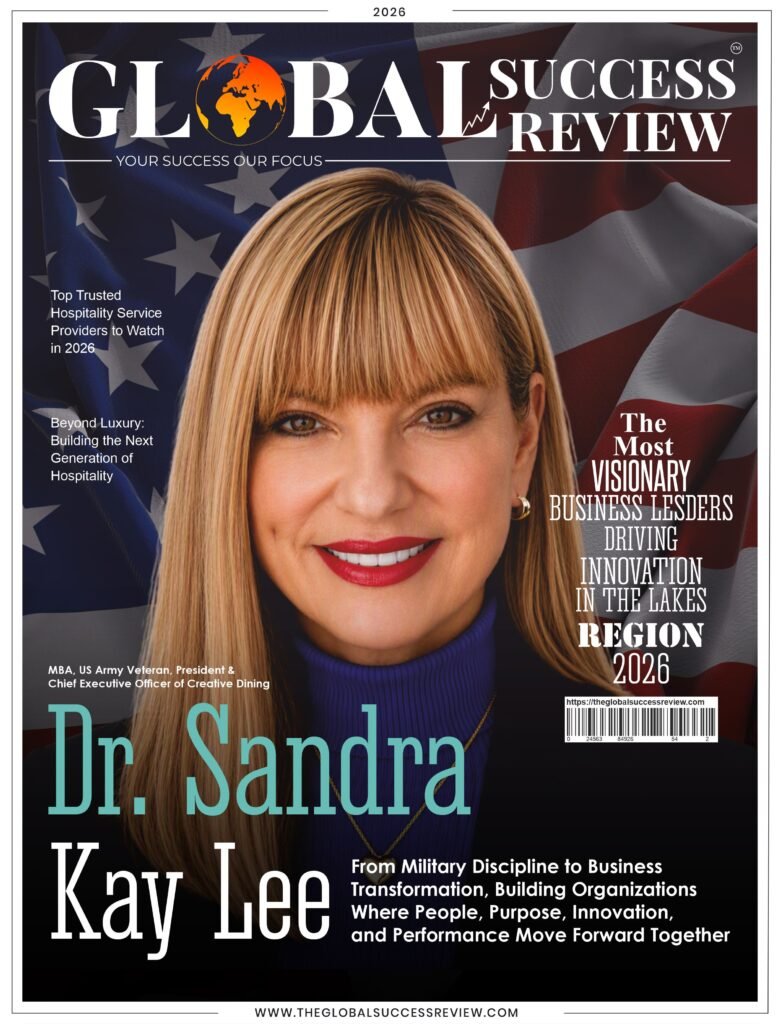
The Most Visionary Business Leaders Driving Innovation in the Great Lakes Region, 2026
From Military Discipline to Business Transformation, Building Organizations Where People, Purpose, Innovation, and Performance Move Forward Together
Leadership is often described through titles, milestones, and measurable achievements. Yet the most consequential leadership journeys are rarely defined by a single position or one decisive moment. They are shaped over time through experiences that challenge an individual to adapt, accept responsibility, understand complexity, and continually raise the standard of what is possible.
For Dr. Sandra Kay Lee, MBA, US Army Veteran, President & Chief Executive Officer of Creative Dining, leadership has been precisely that kind of journey.
Her professional path has brought together military service, business-to-business leadership, food service, human resources, private equity, mergers and acquisitions, negotiation, financial management, organizational development, and executive leadership. Rather than viewing these experiences as separate chapters, Dr. Lee has used each to develop a broader understanding of how successful organizations operate.
Her philosophy is straightforward but demanding: leadership is fundamentally about service, clarity, accountability, and extreme ownership.
That philosophy now shapes her work at Creative Dining, where she is helping strengthen an organization built on meaningful client relationships, talented people, culinary creativity, and a commitment to serving diverse communities.
Recognized as one of The Most Visionary Business Leaders Driving Innovation in the Great Lakes Region, 2026, Dr. Lee represents an increasingly important model of executive leadership: one that combines disciplined execution with human-centered decision-making and innovation with responsibility.
A Foundation Built Through Service
Dr. Lee’s leadership story began remarkably early. At just 17 years old, she entered the United States Army, an experience that accelerated both her intellectual and emotional development.
Military service taught her lessons that would remain relevant throughout her business career: discipline, resilience, teamwork, preparation, accountability, and the importance of contributing to something larger than oneself.
The experience also gave her a deeper appreciation for democracy, responsibility, and the significance of service. Missions and responsibilities encountered during her military career reinforced the understanding that leadership carries consequences and that people depend upon one another when circumstances become uncertain.
Those lessons later became part of her executive approach.
For Dr. Lee, discipline does not mean rigid control. It means following through on commitments, preparing for contingencies, maintaining standards, and remaining consistent even when circumstances are difficult. Likewise, resilience does not mean ignoring setbacks. It means acknowledging reality, adapting intelligently, and continuing forward with purpose.
Her military experience also reinforced a fundamental leadership principle: every person has a role in mission success.
Leaders must establish the objective, clarify responsibilities, provide the necessary resources and training, and then trust capable people to execute. When something goes wrong, effective leadership begins with examining the quality of the preparation, communication, resources, and support provided.
Most importantly, Dr. Lee believes military service taught her that leadership is a privilege.
A title alone cannot create trust. Trust is earned through competence, character, consistency, and responsible action.
A Multidimensional Executive Perspective
As her career progressed, Dr. Lee deliberately accumulated experiences across multiple dimensions of business.
Her background includes B2B environments, food service, non-traditional trade channels, human resources, private equity, mergers and acquisitions, negotiation, and full P&L leadership. Each area provided another perspective on how organizations create value and where they can fail.
This breadth has influenced the way she views business today.
Rather than treating sales, operations, finance, human resources, technology, culture, and strategy as independent functions, Dr. Lee sees them as interconnected parts of one organizational system.
A sales opportunity, for example, has little long-term value if the organization lacks the talent, operational capacity, technology, capital, or leadership infrastructure required to serve that opportunity successfully.
Likewise, a financially attractive decision may not be strategically sound if it damages customer trust, employee engagement, service quality, or the long-term health of the organization.
Her MBA education, followed later by doctoral work in higher education leadership, further expanded that perspective by connecting business strategy with organizational development, learning, and human behavior.
The result is an executive philosophy grounded in both financial discipline and organizational intelligence.
Leading Creative Dining Through Transformation
When Dr. Lee assumed the role of President and CEO of Creative Dining Services, she saw an organization with a strong foundation.
There were deeply held values, longstanding client relationships, talented professionals, and a genuine commitment to service. The opportunity, therefore, was not to discard the company’s identity, but to strengthen it.
Her transformation philosophy can be summarized in three words:
Stabilize. Build. Scale.
Stabilization means strengthening teams, clarifying expectations, improving processes, reducing unnecessary variability, and ensuring consistent delivery.
Building means developing leadership depth, strengthening organizational infrastructure, improving systems, using technology more effectively, and creating the capabilities required for future growth.
Scaling means pursuing opportunities in sectors and geographies where Creative Dining can differentiate itself, execute effectively, and preserve the personal relationships that are central to its identity.
This approach reflects Dr. Lee’s belief that transformation should never become change for the sake of change.
Instead, transformation should preserve what is valuable, address what limits an organization, and create the capabilities required to serve more people without losing the qualities that made the organization successful in the first place.
At Creative Dining, that means combining culinary creativity, mission-aligned partnerships, and accessible, accountable leadership.
The ambition is to provide clients with the personal responsiveness and customization associated with a smaller organization while delivering the systems, expertise, and operational discipline expected from a larger enterprise.
Serving Different Communities Through Understanding
Creative Dining operates across diverse environments, including higher education, healthcare, business and industry, independent K-12 schools, senior living, camps, and conference centers.
Dr. Lee recognizes that these environments cannot be approached through a single standardized model.
A university dining program may contribute to student belonging, wellness, retention, and campus culture. A corporate dining environment may support employee engagement, recruitment, productivity, and workplace experience. Senior living requires an especially strong emphasis on dignity, familiarity, hospitality, nutrition, choice, and community.
Schools require trust, safety, nutrition, consistency, and strong relationships with families.
The common denominator is not a universal operating model. It is listening.
Dr. Lee believes organizations must understand the mission, culture, population, rhythms, and expectations of each community before determining how best to serve it.
Operational standards create reliability, but customization allows the dining experience to reflect the people being served.
This philosophy makes mission alignment an important differentiator for Creative Dining. The organization is not simply entering a facility to operate a food program. It is becoming part of a community.
Financial Discipline Without Losing the Human Purpose
For Dr. Lee, profitability and service excellence are not opposing goals.
Healthy financial performance provides organizations with the resources to invest in employees, training, technology, culinary development, equipment, and customer experiences. Conversely, financial performance achieved by sacrificing quality, safety, engagement, or trust is unlikely to remain healthy over time.
Her approach emphasizes stewardship rather than cost-cutting alone.
That means understanding budgets, labor models, purchasing practices, production data, contractual commitments, and customer expectations while also recognizing the human and operational consequences of financial decisions.
Reducing waste, improving productivity, forecasting more accurately, strengthening purchasing practices, and standardizing processes where appropriate can improve both financial performance and service quality.
For Dr. Lee, a strong P&L should be viewed as an outcome of a well-led operation, not as a substitute for one.
Long-term sustainability depends upon protecting the entire system: financial health, client confidence, employee capability, guest satisfaction, food safety, and organizational reputation.
Creating a Culture of Ownership
One of the defining elements of Dr. Lee’s leadership philosophy is extreme ownership.
She believes employees cannot genuinely take ownership without clarity. People need to understand the mission, expectations, standards, boundaries of authority, and desired outcomes.
Once those foundations are established, however, leaders should create room for people to lead.
Sandra believes autonomy should be earned through accountability, preparation, judgment, and consistent performance.
This creates a powerful relationship between responsibility and trust: the more effectively people demonstrate ownership, the more opportunity they receive to exercise judgment and innovate.
Recognition is another important component.
Stories of employees solving problems, supporting colleagues, improving operations, responding to crises, or creating extraordinary client experiences demonstrate what organizational values look like in practice.
Sandra describes this collective mindset through a simple principle: the organization wins together.
The message is clear. Organizational success is not the achievement of one executive. It is the combined result of people who understand their contribution to something larger.
Innovation With a Purpose
The food-service industry is changing rapidly.
Artificial intelligence, integrated data systems, evolving consumer expectations, workforce pressures, sustainability, food costs, supply-chain volatility, and increasing demand for transparency are reshaping how organizations operate.
Dr. Lee sees the next three to five years as a period in which technology and human capability will increasingly intersect.
Artificial intelligence and integrated data platforms have the potential to improve forecasting, menu development, nutrition analysis, production planning, purchasing, inventory management, communication, and decision-making.
But she also emphasizes an important limitation: technology cannot compensate for poor data.
The objective, therefore, is not simply to adopt technology because it is available. Innovation must solve meaningful business or operational problems.
At Creative Dining, their Culinary Back Office software represents part of this transformation. By strengthening recipe consistency, nutritional information, production planning, menu cycles, purchasing alignment, and operational information, technology can help leaders make better decisions.
Dr. Lee sees AI similarly.
AI should enhance human judgment rather than replace it. Its greatest value may come from reducing repetitive administrative work, identifying patterns, improving accuracy, and giving leaders more time to focus on people, guests, clients, strategy, and innovation.
For her, technology without purpose is not meaningful innovation.
The real measure is whether innovation improves the guest experience, strengthens safety, supports employees, reduces waste, improves financial performance, or creates measurable value for clients.
Standards That Create Space for Creativity
One of Creative Dining’s important transformation initiatives involves strengthening culinary operations through clearer standards, training, data, and disciplined implementation.
The objective is not to eliminate creativity.
Instead, standards provide the foundation from which creativity can flourish.
Stronger recipe management, menu-cycle planning, production records, purchasing alignment, allergen information, nutritional accuracy, training, and accountability create greater consistency and reliability.
At the same time, culinary professionals retain the ability to innovate and elevate the guest experience.
Dr. Lee believes implementation is just as important as strategy. A new standard cannot succeed simply because a document has been distributed.
Successful implementation requires clear responsibilities, training, communication, measurement, follow-up, recognition, and a process for addressing noncompliance.
This illustrates one of the central principles of her leadership approach:
Vision begins the work. Disciplined execution completes it.
Sustainability as an Operating Responsibility
Sandra also views sustainability as something that must be integrated into everyday operations rather than treated as an occasional campaign.
Food waste, for example, is simultaneously an environmental, financial, operational, and ethical issue.
Better forecasting, thoughtful menu planning, standardized recipes, accurate production records, effective inventory practices, and examination of what is returned or discarded can all contribute to meaningful waste reduction.
Responsible sourcing is another component.
Creative Dining has expressed a commitment to sourcing cage-free shell and liquid eggs and working closely with vendor partners to maintain that commitment while protecting quality, availability, and operational consistency.
But sustainability, in Dr. Lee’s view, extends beyond resources.
Nutrition, food safety, community health, and education also belong within the broader concept of a sustainable food system.
And sustainability must ultimately be measurable.
Organizations should establish objectives, develop baselines where possible, assign responsibility, monitor progress, and communicate results honestly.
That is how sustainability moves from aspiration to accountability.
Business as a Force for Community Impact
Dr. Lee’s perspective on corporate responsibility extends beyond traditional philanthropy.
For a food-service organization, community impact can be connected directly to its core competencies in food systems, purchasing, production, nutrition, logistics, and community dining.
Food insecurity is an example.
Rather than viewing the issue only through occasional donations, businesses can use their knowledge, relationships, resources, and operational capabilities to build stronger partnerships with schools, universities, food banks, nonprofit organizations, employers, and community leaders.
Sandra has participated in industry conversations surrounding food insecurity and believes collaboration is essential because no single organization can solve complex social challenges independently.
Her approach begins with a fundamental question:
What does the community actually need?
From there, organizations can define desired outcomes, clarify responsibilities, establish measurements, and remain engaged long enough to understand whether their efforts are making a difference.
This transforms corporate responsibility from a periodic activity into a meaningful component of organizational purpose.
Global Perspective, Local Responsibility
Dr. Lee’s broader professional engagement has also expanded her perspective beyond traditional organizational boundaries.
Her work connected with Forttuna Councils and the United Nations Economic and Social Council has exposed her to conversations involving leaders and institutions addressing complex challenges across different cultural, economic, and institutional environments.
Those experiences have reinforced her belief that responsible leadership requires awareness of the broader consequences of business decisions.
Supply chains, labor, food systems, health, education, water, technology, and environmental sustainability are increasingly interconnected.
Yet global thinking must ultimately remain connected to local realities.
For Dr. Lee, responsible business development is therefore not simply about where an organization can grow. It is about how it grows, whom it serves, what resources it uses, what opportunities it creates, and whether its presence strengthens the communities around it.
The Confidence to Lead Through Complexity
Dr. Lee also brings a distinctive perspective to executive presence and situational confidence.
For her, situational confidence is not about pretending to know everything.
It is the ability to assess a situation, determine what is required, and respond with the appropriate level of clarity, composure, and conviction.
A confident leader can say, “I do not know yet, but we will find the answer.”
That is not weakness. It is credibility grounded in honesty.
Executive presence, in her view, is not simply charisma or polish. It is credibility under pressure, demonstrated through preparation, judgment, communication, emotional steadiness, and respect.
Strong leaders can make difficult decisions while still inviting dissent. They can acknowledge concerns without becoming defensive. They can maintain high standards without humiliating people.
The objective is not to dominate the room.
It is to help the room address the issue honestly and move forward responsibly.
Developing the Next Generation of Leaders
Looking toward the future, Dr. Lee encourages emerging executives to prioritize two capabilities above all others: talent development and stakeholder relationships.
Strategy cannot be executed without capable people, and sustainable growth cannot exist without trust.
Talent development, she emphasizes, is more than training. It involves identifying potential, establishing expectations, providing meaningful feedback, creating opportunities to lead, holding people accountable, and helping individuals understand how their contributions connect to the organization’s future.
When leaders develop other leaders, they create organizational capacity and resilience.
Stakeholder relationships are equally important.
Employees, clients, boards, suppliers, community partners, and guests may have different priorities, but each needs confidence that leadership will listen, communicate honestly, and follow through.
Negotiation and strategic growth become more effective when built on these foundations.
The goal should not simply be to win a transaction. It should be to create value and leave people, partnerships, and organizations stronger because of the way business was conducted.
A Vision Rooted in Responsibility
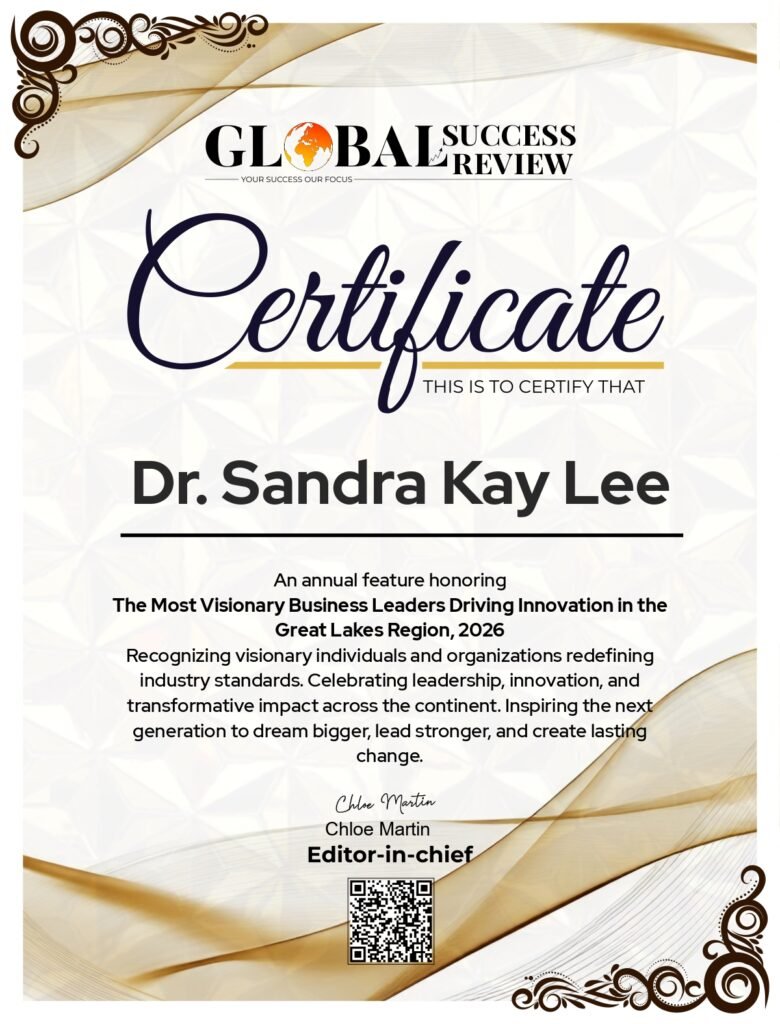
Dr. Sandra Kay Lee’s recognition among The Most Visionary Business Leaders Driving Innovation in the Great Lakes Region, 2026 is ultimately a reflection of a leadership philosophy that connects vision with responsibility.
Her story brings together military discipline, executive experience, financial stewardship, organizational transformation, technology, culinary innovation, sustainability, community engagement, and people development.
But beneath all of those dimensions is a consistent principle: leadership is about creating the conditions for people and organizations to succeed.
The Great Lakes region carries a powerful tradition of entrepreneurship, manufacturing, education, agriculture, innovation, resilience, and community leadership. It is also a region where relationships and practical execution continue to matter.
Dr. Lee’s approach reflects those qualities.
She does not define innovation as novelty. She defines it through meaningful outcomes.
She does not view growth as valuable simply because it is growth. It must be sustainable.
She does not see technology as a replacement for people. It should enable them to perform better.
She does not separate financial performance from culture and service. They are interconnected.
And she does not view recognition as the destination of leadership. Recognition creates another responsibility: to use the platform to elevate people, strengthen industries, encourage innovation, and contribute to communities.
As Creative Dining continues its journey of stabilization, development, and scale, Dr. Lee’s vision is clear: build an organization capable of performing at a higher level without losing its human character.

In a business environment where complexity continues to increase, that balance may be one of the most valuable forms of leadership.
Vision provides direction.
Discipline provides consistency.
Innovation creates possibility.
People create progress.
And responsible leadership brings them together.
For Dr. Sandra Kay Lee, that is not simply a philosophy.
It is the standard by which the next chapter of leadership is being built.