
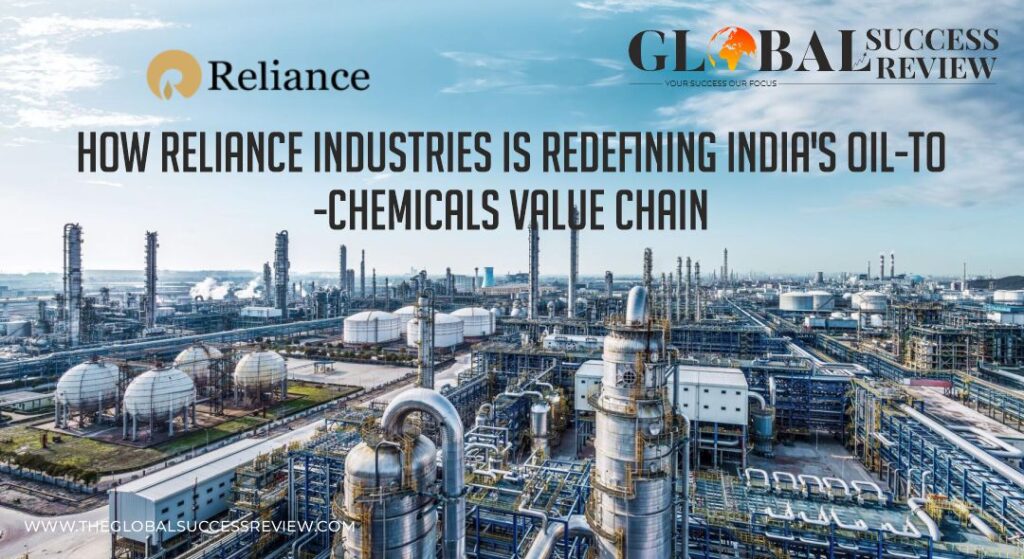
India’s energy and chemicals industries are undergoing a significant transformation, driven by rising domestic demand, evolving global markets, technological innovation, and the growing need for sustainable production. At the center of this transformation is Reliance Industries Limited (RIL), which has developed one of the world’s most integrated oil-to-chemicals (O2C) businesses. By connecting crude oil refining, petrochemicals, polymers, intermediates, and specialty chemicals, Reliance has created a highly integrated value chain that demonstrates how scale, technology, and strategic diversification can strengthen industrial competitiveness.
Building an Integrated Refining and Petrochemicals Ecosystem
A defining strength of Reliance’s O2C strategy is its integration across multiple stages of the value chain. Rather than operating refining and chemical businesses as isolated units, the company has built an interconnected ecosystem in which refinery streams can be converted into higher-value chemical products.
This integrated approach enables Reliance to improve resource utilization, optimize production economics, and respond more efficiently to changing market conditions. The Jamnagar complex, one of the world’s largest refining hubs, serves as a critical foundation of this ecosystem, supporting the company’s broader energy and chemicals operations.
Moving Beyond Traditional Fuels
The global energy landscape is gradually shifting, with changing consumer behavior, stricter environmental expectations, and the growth of alternative energy sources influencing the future of traditional fuels. Reliance has responded by strengthening its focus on higher-value products and chemical applications.
The company’s O2C business spans fuels, polymers, polyesters, elastomers, intermediates, and other chemical products that support industries ranging from packaging and textiles to automotive and consumer goods. This diversification allows Reliance to capture greater value from hydrocarbon resources while reducing its dependence on conventional fuel markets alone.
Driving Scale Through Technology and Innovation
Technology plays an important role in Reliance’s approach to the O2C value chain. Advanced refining capabilities, process integration, digital technologies, and operational efficiencies help the company maximize the value of its feedstocks.
Innovation also supports the development of new materials and chemical solutions that can address evolving industrial requirements. By combining manufacturing scale with research and technology capabilities, Reliance continues to strengthen its position across the global energy and chemicals landscape.
Creating a More Circular and Sustainable Value Chain
Sustainability is increasingly becoming an important part of the chemicals industry. Reliance is exploring opportunities to reduce carbon intensity, improve resource efficiency, increase the use of renewable energy, and develop circular solutions.
The company’s broader energy transition strategy includes investments in new energy and clean technologies. Within the O2C ecosystem, this creates opportunities to gradually integrate lower-carbon technologies and circular economy principles into established industrial operations.
Strengthening India’s Industrial Competitiveness
Reliance’s integrated O2C model has implications beyond its own business. A strong domestic refining and chemicals ecosystem can support downstream industries, strengthen manufacturing capabilities, generate employment, and reduce dependence on imports for critical materials.
By producing a wide range of value-added products within an integrated ecosystem, Reliance contributes to India’s ambition of becoming a more competitive manufacturing and industrial economy.
The Road Ahead
Reliance Industries’ O2C journey illustrates how an energy company can evolve by moving from a traditional refinery-centered model toward a broader, integrated chemicals and materials platform. Its ability to connect refining with petrochemicals, leverage technology, pursue higher-value products, and invest in sustainability provides a compelling case study in industrial transformation.
As global energy markets continue to evolve, the future of Reliance’s O2C business will increasingly depend on its ability to balance scale and profitability with innovation and sustainability. Its ongoing transformation demonstrates that the most resilient energy businesses may be those capable of turning existing capabilities into new opportunities while preparing for the industrial landscape of tomorrow.
[Apply for a Featured Profile on The Global Success Review Magazine] [Contact: theglobalsuccessreview.com]
