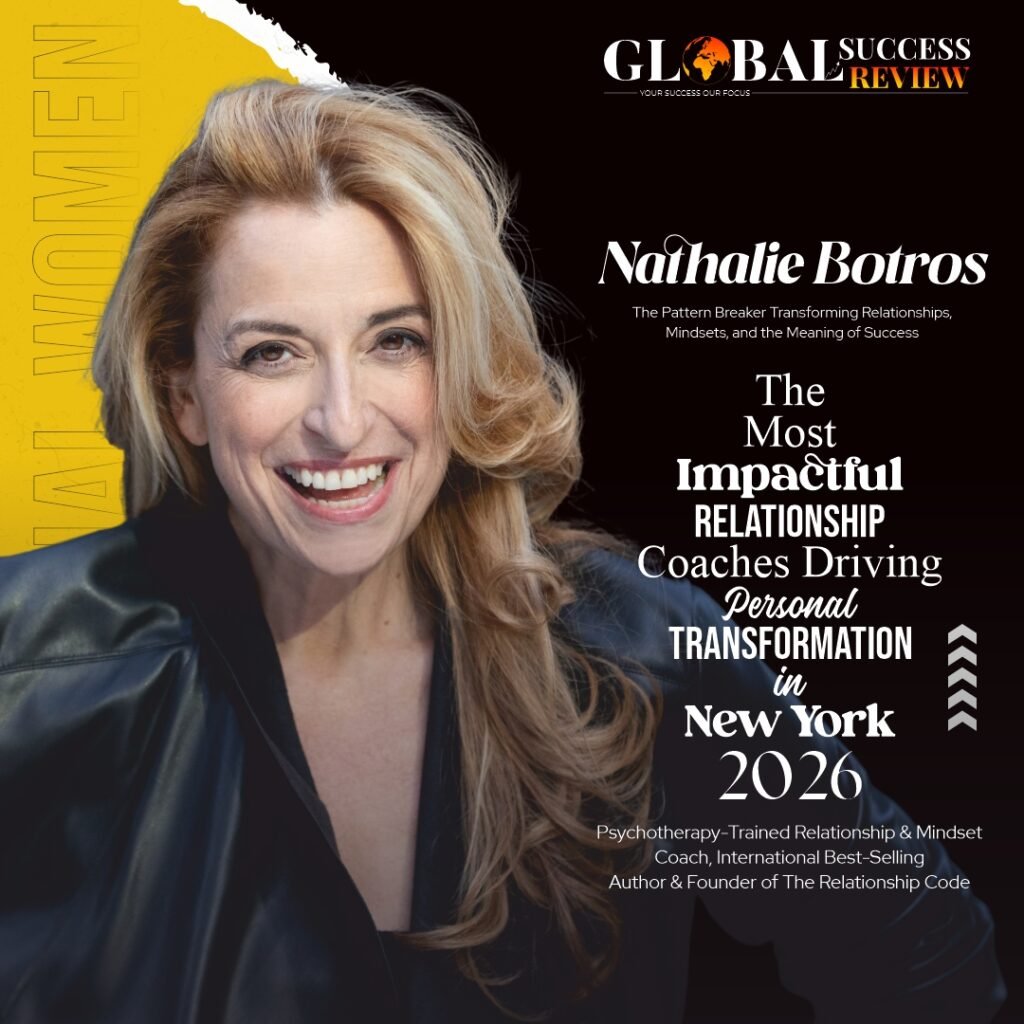
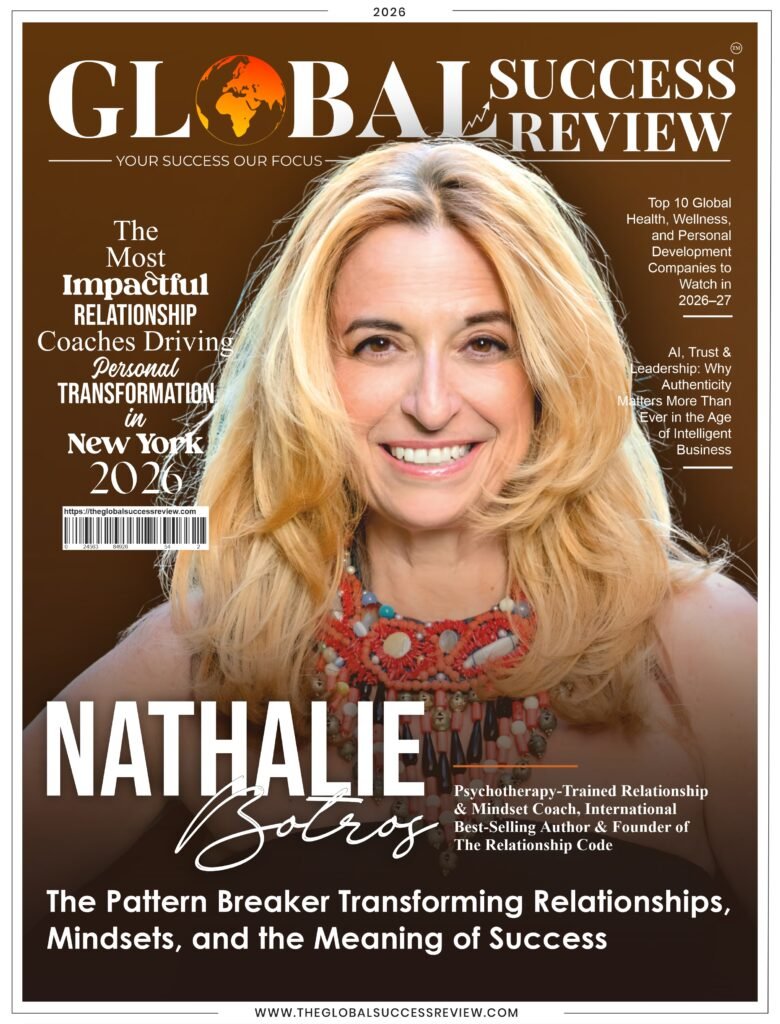
Front Cover Feature | The Global Success Review Magazine™
Edition: The Most Impactful Relationship Coaches Driving Personal Transformation in New York, 2026
Beyond Success: Discovering the Patterns That Shape Our Lives
What does it truly mean to live a happy and fulfilling life? Is it professional achievement, financial security, meaningful relationships, personal freedom, or the ability to appreciate the life we have created? For many people, success is measured by visible accomplishments. Yet beneath impressive careers and carefully built lives, there can be unspoken questions, emotional challenges, and recurring patterns that prevent individuals from experiencing genuine fulfillment.
For Nathalie Botros, these questions have become the foundation of a professional mission: helping people understand themselves, transform their relationships, and create lives that reflect what genuinely matters to them.
Known as The Pattern Breaker, Nathalie is a psychotherapy-trained relationship and mindset coach, international best-selling author, professional keynote speaker, and founder of The Relationship Code. Her work is grounded in a compelling observation: people can recognize what makes them unhappy and still find themselves repeating the same behaviors, choosing familiar situations, and experiencing similar challenges.
Her journey into personal transformation began with a simple but important question: Why do we continue doing things that do not make us happy, even when we know better?
That curiosity led her to study psychotherapy and explore the relationship between human behavior, emotional well-being, and happiness. Her own experiences also shaped her understanding that happiness is not something we simply discover outside ourselves. It is something we must learn to create through awareness, choices, and the way we relate to ourselves and others.
This philosophy initially inspired her to establish The Bon-Vivant Girl and become known as the Happiness Activator. Through coaching, writing, and personal development initiatives, she encouraged people to approach life with greater joy, self-acceptance, and intention. As her work evolved, she began recognizing a deeper connection between happiness and the behavioral patterns influencing people’s everyday decisions.
That realization became the starting point for The Relationship Code.
The Pattern Breaker: Moving Beyond Familiar Behaviors
Patterns influence far more of our lives than we may realize. Some help us develop discipline, confidence, and resilience. Others can quietly limit our growth, weaken relationships, and prevent us from expressing our genuine needs.
A person may constantly prioritize everyone else’s happiness, avoid difficult conversations to maintain peace, or feel compelled to control every situation. These behaviors may once have offered security, acceptance, or a sense of belonging. However, when they continue automatically, even after circumstances have changed, they can become obstacles to emotional growth.
Nathalie’s philosophy encourages individuals to become curious about these behaviors rather than simply judging themselves for having them.
Being The Pattern Breaker means helping people recognize that their past experiences do not have to determine their future choices. Individuals can examine what drives their reactions, understand why certain behaviors continue, and gradually develop healthier responses.
This perspective is particularly relevant among high achievers, entrepreneurs, and leaders. Professional success does not necessarily guarantee emotional fulfillment. Some individuals become highly skilled at meeting expectations, solving problems, and carrying responsibility while overlooking their own emotional needs.
The same qualities that support achievement can sometimes create difficulties in personal relationships. A leader who is accustomed to controlling professional situations may struggle with vulnerability at home. Someone who constantly seeks approval may achieve significant milestones while feeling that nothing is ever enough. Others remain so occupied with their responsibilities that they have little opportunity to enjoy the life they have worked hard to build.
Nathalie does not view ambition as the problem. Instead, she encourages people to recognize when their pursuit of achievement begins to affect their well-being, identity, and relationships.
For her, genuine fulfillment means enjoying what one achieves without losing oneself or sacrificing the people and experiences that make life meaningful.
The Relationship Code: Three Relationships That Shape Every Life
One of Nathalie’s central contributions to personal development is her understanding that relationships extend beyond romantic partnerships.
Through The Relationship Code, she focuses on three interconnected relationships: the relationship with ourselves, the relationship with our partners, and the relationship with our work.
The first relationship begins within. How individuals see themselves, what they believe they deserve, how they communicate their needs, and how comfortable they are with their own identity influence the connections they create with others.
When people struggle with self-worth or constantly seek external validation, they may tolerate situations that make them unhappy, avoid necessary conversations, or make decisions based on other people’s expectations.
The second relationship concerns the connections people build with their partners. Communication, affection, emotional availability, mutual respect, and the ability to navigate disagreements all influence the quality of a relationship. Nathalie emphasizes that meaningful relationships require more than simply being together; they require genuine attention and a willingness to understand one another.
The third relationship is with work. For many professionals, particularly high achievers, career accomplishments become closely connected to personal identity and self-worth. Although ambition can be a powerful source of motivation, an unhealthy relationship with work can leave little room for personal priorities, meaningful connections, and enjoyment.
The Relationship Code brings these three dimensions together. Rather than treating them as separate challenges, Nathalie’s approach explores how patterns in one area can influence the others.
Her work combines psychological understanding with practical coaching strategies. The objective is not simply to help individuals understand why they behave in certain ways, but to help them translate that awareness into meaningful changes in everyday life.
From Awareness to Action: A Practical Framework for Transformation
The Relationship Code is structured as a 90-day program built around three progressive phases: Decoding, Integration, and Embodiment.
The first phase, Decoding, focuses on self-understanding. Clients explore the beliefs, experiences, and emotional triggers that influence their behavior. They begin identifying recurring patterns and examining how those patterns affect their relationships, decisions, and sense of fulfillment.
The second phase, Integration, turns awareness into action. Clients begin practicing different responses in real-life situations. This may involve communicating needs more clearly, establishing boundaries, becoming more comfortable with difficult conversations, or learning to pause before reacting emotionally.
The third phase, Embodiment, focuses on making those changes more consistent. Recognizing a pattern is one achievement; responding differently when stressed, frustrated, or under pressure is another. This stage helps clients strengthen new behaviors so they can become more natural parts of everyday life.
Importantly, Nathalie does not present transformation as a demand for perfection. Old habits may occasionally return, particularly in familiar or emotionally challenging situations. Progress comes from recognizing those moments, making conscious adjustments, and continuing forward.
Her approach reflects a practical belief: psychological insight becomes especially valuable when people can use it to change how they live.
The Power of Small Changes: Boundaries, Communication, and Confidence
One of the recurring challenges Nathalie observes is the difficulty people experience when establishing healthy boundaries.
High achievers often become accustomed to being dependable, available, and willing to take on additional responsibilities. Although these qualities can contribute to professional success, they may also encourage people to agree to requests without considering their own time, energy, or priorities.
Nathalie encourages individuals to interrupt this automatic response. Instead of immediately saying yes, they can create space to consider a request by responding, “Let me check my schedule and get back to you.”
Simple communication can also help people express their limits without excessive explanations or apologies. Saying that they cannot take on another responsibility this week, for example, can be both respectful and clear.
She also challenges the assumption that feeling guilty means someone has done something wrong. When people are accustomed to putting others first, establishing boundaries may initially feel uncomfortable. Learning to tolerate that discomfort is part of developing healthier relationships.
Her perspective is equally relevant to romantic partnerships. Professional stress, unresolved disagreements, and emotional distance can gradually affect communication between partners. Small misunderstandings may become larger conflicts when people stop explaining their feelings, listening carefully, or making time to connect.
Nathalie encourages couples to recognize these patterns before they become persistent sources of resentment. Taking time to decompress after a difficult day, asking questions rather than making assumptions, and returning to difficult conversations when both people are calmer can help create healthier communication.
The objective is not to eliminate stress or disagreement. It is to prevent those experiences from becoming the dominant way people relate to one another.
A Meaningful Transformation: The Importance of Healthy Boundaries
An anonymized client experience illustrates the practical impact of Nathalie’s approach.
She recalls working with a divorced father who struggled to say no to his children. Wanting to make them happy and avoid disappointing them, he frequently agreed to their requests without considering how those commitments affected the rest of his life.
This pattern also created tension in his relationship with his girlfriend. He sometimes avoided discussing existing plans with his children because he worried they might become upset. As a result, he felt increasingly stressed while attempting to manage everyone’s expectations.
Through coaching, he began recognizing his tendency to prioritize other people’s feelings at the expense of his own needs. One practical adjustment was learning not to agree immediately to every request. Instead, he started giving himself time to consider his decisions and became more comfortable communicating boundaries.
An unexpected benefit followed: his relationships improved. His children became more open about their expectations and even encouraged him to communicate his plans more clearly. His relationship with his girlfriend also improved, while his own stress began to decrease.
The experience demonstrated an important principle within Nathalie’s work: setting boundaries does not mean caring less about others. It can create greater clarity, mutual understanding, and healthier connections.
Sometimes, changing one recurring behavior can improve several relationships at once.
Happiness, Self-Worth, and a New Definition of Success
Nathalie’s interest in happiness has remained a consistent thread throughout her professional journey.
Her earlier book, If You Are What You Eat, Should I Eat a Skinny Girl?, explored self-love and self-acceptance through an accessible and engaging perspective. What initially appeared to be a book about weight and lifestyle ultimately became a broader reflection on self-worth.
Her later book, The Happiness Cocktail: The Right Ingredients for a Life of Happiness and Hope, developed this philosophy further. Through her S.M.I.L.E. framework—Smile, Move, Invest, Love, and Enjoy—she encourages readers to make conscious choices that support happiness and personal fulfillment.
For Nathalie, happiness is not dependent on having a perfect life or achieving every desired milestone. It involves understanding what matters, recognizing the expectations that influence our decisions, and making room for enjoyment in the life we already have.
This message is especially important for ambitious professionals. She believes people do not need to choose between being successful and being happy. Instead, they need to define success in a way that includes meaningful relationships, personal identity, and the ability to enjoy their accomplishments.
Her guiding question is straightforward: What does success actually mean to you?
The answer should not be determined exclusively by family expectations, social recognition, or what appears impressive to others. It should reflect the individual’s own values and priorities.
Thought Leadership Beyond Coaching
Nathalie’s influence extends across coaching, authorship, publishing, and public speaking. As Executive Editor of Ageless Living Magazine, she contributes to conversations about lifestyle, personal growth, and the experiences that shape people’s lives.
She is also a featured expert in the documentary Pillars of Power: The Hidden Secret Behind Achieving Greatness, providing another platform through which she can share her perspective on the importance of relationships and personal development.
Her professional recognitions include selection for Marquis Who’s Who in 2024, the International Association of Top Professionals’ 2023 Top Happiness Coach of the Year recognition, and Hall of Fame recognition from Passion Vista in 2023. She has also received acknowledgments from publications including Best Holistic Life Magazine, Soeleish Magazine, Magnate View Magazine, and World Leaders Magazine.
Her authorship includes The Happiness Cocktail (2024) and If You Are What You Eat, Should I Eat a Skinny Girl? (2017), alongside contributions to leadership and personal-development anthologies.
These activities reflect a broader commitment to bringing conversations about happiness, emotional awareness, and relationships to audiences beyond individual coaching sessions.
The Future: Helping People Live, Love, and Lead Consciously
Looking ahead, Nathalie’s priorities include expanding The Relationship Code and making its principles accessible to more leaders, entrepreneurs, and high achievers.
She sees opportunities to bring these conversations into professional environments through corporate workshops, leadership programs, and speaking engagements. Her ambition is to encourage organizations to recognize that emotional and relational skills matter alongside professional expertise.
People spend considerable time developing the capabilities required to achieve success. Nathalie believes equal attention should be given to the skills needed to enjoy that success, communicate effectively, and maintain healthy relationships.
Writing, speaking, and media initiatives will continue to support this mission. Through these platforms, she hopes to expand awareness of how personal patterns influence professional decisions, leadership behaviors, and the quality of everyday relationships.
Ultimately, she wants The Relationship Code to become more than a coaching program. She envisions its principles reaching people through multiple channels, helping them create healthier relationships with themselves, their partners, and their work.
A Legacy of Conscious Choices
For Nathalie Botros, a meaningful legacy is not measured only by the number of books published, people coached, or stages reached. It is measured by the difference made in people’s lives.
She wants individuals to recognize that they do not have to keep repeating the same behaviors simply because those behaviors are familiar. They can understand themselves more deeply, communicate more honestly, establish healthier boundaries, and make decisions that reflect who they want to become.
Whether it is someone finding the confidence to speak up, a couple learning to communicate with greater understanding, or a professional discovering that ambition does not have to come at the expense of personal fulfillment, these changes represent the impact she hopes to create.
Her work challenges people to look beyond external achievements and pay attention to the patterns shaping their everyday experiences.
In a world that often celebrates doing more, achieving more, and moving faster, Nathalie offers an important reminder: a fulfilling life is not defined solely by what we accomplish, but also by how we relate to ourselves, the people around us, and the work we choose to pursue.
Through The Relationship Code, her writing, and her speaking engagements, she continues to encourage a more conscious approach to personal transformation.
Her message is simple yet powerful: We do not have to keep living on autopilot. We can break familiar patterns, make conscious choices, and create a new code for how we live, love, and lead.
The Global Success Review Magazine™
Every Company Has a Story. Every Leader Has a Journey.