Crafting Imaginative Worlds Through Storytelling, Multimedia, and Creative Vision
In an era where creativity is increasingly shaped by speed, algorithms, and constant digital noise, truly original voices stand apart not because they follow trends, but because they build worlds of their own.
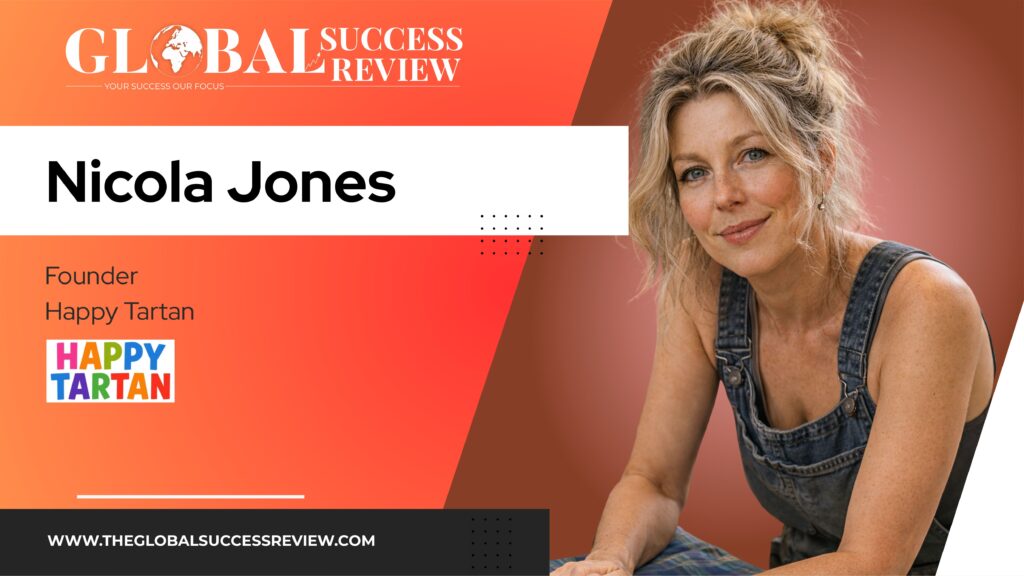
Nicola Jones is one of those rare creative visionaries.
A multimedia artist, storyteller, and creative entrepreneur, Nicola has spent years quietly building imaginative universes rooted in emotion, humour, culture, storytelling, and visual identity. Her work moves fluidly across branding, illustration, multimedia, tourism, product development, digital creativity, and character-led storytelling, blending traditional imagination with evolving technology in a way that feels both timeless and future-focused.
Recognised as one of The Most Creative Entrepreneurs to Watch in 2026, Nicola represents a new generation of creative leadership: one that values originality over imitation, emotional connection over mass production, and meaningful storytelling over fleeting visibility.
Her journey is not simply about building brands.
It is about bringing ideas to life.
From early childhood imagination to award-winning international creative projects, Nicola’s story reflects the evolution of a creator who never stopped building, imagining, experimenting, and believing in the power of creativity to connect people, strengthen communities, and inspire possibility.
At the centre of her work lies a deeply human philosophy:
Creativity should feel alive.
And through every illustration, story, character, multimedia concept, and entrepreneurial venture, Nicola Jones continues proving exactly that.
A Creative Spirit Born from Imagination
Long before entrepreneurship, multimedia branding, or international recognition entered the picture, creativity was already shaping Nicola’s world.
As a child, she was constantly creating, drawing, building miniature environments, writing stories, and transforming ordinary materials into imaginative worlds. Her creativity did not begin as a business strategy or career ambition. It emerged instinctively through curiosity, visual storytelling, and imagination.
One of her earliest memories remains deeply symbolic of the creative path she would later follow.
Her father, a joiner, built her a dolls house complete with rooms she could decorate, redesign, and transform creatively herself. Without fully realising it at the time, those experiences became her earliest introduction to visual storytelling, spatial creativity, and world-building.
“I was always creating in some form,” Nicola reflects. “Drawing, making collages, writing stories, building little worlds. Creativity was simply part of how I experienced life.”
Books, films, humour, Scottish culture, and emotionally rich storytelling also played a significant role in shaping her imagination. Stories that carried atmosphere, emotion, and memorable characters stayed with her deeply, particularly The Outsiders, whose emotional intensity and cinematic storytelling left a lasting impact.
Yet despite this natural creative instinct, Nicola did not grow up believing that being an artist or storyteller was necessarily a realistic career path.
Like many creatives of her generation, she was surrounded by more traditional expectations. Stability, practicality, and conventional employment were viewed as the safer route. Creativity existed, but often as a passion rather than a profession.
So Nicola entered the workforce early, spending years working in kitchens, catering, and hospitality.
What appeared at first to be a completely separate chapter of life would later become one of the hidden foundations of her entrepreneurial mindset.
The fast-paced world of hospitality taught her discipline, organisation, resilience, adaptability, teamwork, and work ethic. It taught her how to solve problems quickly, manage pressure, and keep moving even when circumstances became difficult.
Those lessons would eventually become invaluable.
Because creative entrepreneurship demands far more than creativity alone.
It demands endurance.
Discovering Multimedia at the Dawn of Digital Creativity
Nicola’s creative direction shifted profoundly when she made the decision to pursue art education instead of continuing along a more traditional working path.
She first studied art in Weymouth before later moving into multimedia studies in Glasgow during a pivotal moment in technological history.
At the time, multimedia itself was still an emerging field.
Digital design, interactive media, creative technology, animation, screen-based storytelling, and digital communication were rapidly evolving industries. Nicola and her fellow students were exploring creative territories that had not yet fully formed.
For Nicola, multimedia felt instantly natural.
It combined everything she loved:
storytelling, design, technology, graphics, communication, creativity, and visual imagination.
“We were among the early students exploring digital media while the industry itself was still developing,” she explains. “It felt exciting because there were very few limits to where creativity and technology could eventually go.”
One memory from her studies still stands out today.
She recalls being asked how future creatives would overcome technological limitations.
Her answer was simple:
Eventually, there would be fewer and fewer limitations.
Looking back now, that prediction feels remarkably accurate.
Over the decades, Nicola has witnessed the extraordinary rise of multimedia technology, digital storytelling, animation tools, social media, branding ecosystems, and AI-assisted creativity. Rather than resisting technological change, she evolved alongside it, continuously adapting her creative process while protecting the originality at its core.
That balance between innovation and authenticity would later become one of the defining characteristics of her work.
From Creativity to Entrepreneurship
Nicola Jones did not begin her journey with the intention of becoming an entrepreneur.
She simply wanted to create.
But over time, her artwork, ideas, products, and visual storytelling began connecting with people in increasingly meaningful ways.
That connection became the foundation for what would later grow into several successful creative ventures.
One of her earliest entrepreneurial projects was Bute Gifts, a creative brand inspired by the beauty, culture, and atmosphere of the Isle of Bute. Through artwork, products, and place-based creativity, Nicola discovered that people responded emotionally to work that carried authenticity and identity.
Seeing customers buy, collect, and emotionally connect with her creations transformed something inside her.
For the first time, creativity no longer felt hidden or uncertain.
It felt viable.
That confidence later evolved into The Highland Dancer, an award-winning international brand that significantly expanded her understanding of branding, marketing, audience engagement, product development, and creative business growth.
Building The Highland Dancer taught Nicola that creativity and entrepreneurship were not separate worlds.
They could strengthen each other.
Through years of experimentation, adaptation, and growth, she learned how creative ideas could evolve into scalable products, international audiences, and long-term brand ecosystems without losing emotional authenticity.
“Entrepreneurship became part of the creative process itself,” she explains. “I realised that branding, storytelling, products, and business growth could all work together creatively.”
Today, that evolution continues through Happy Tartan, her expansive multimedia storytelling project that combines tartan design, humour, characters, branding, animation concepts, visual storytelling, and imaginative world-building.
Happy Tartan represents more than a business.
It represents creative freedom.
The Philosophy Behind Nicola’s Creativity
At the heart of Nicola Jones’ work lies a creative philosophy rooted in authenticity, emotional connection, and imaginative storytelling.
For Nicola, creativity should never feel purely commercial.
It should feel human.
Whether designing characters, developing visual branding, creating products, or building multimedia narratives, her focus remains on creating work that emotionally resonates with people rather than simply capturing attention temporarily.
“I believe creativity should feel meaningful, imaginative, and emotionally genuine,” she says. “People connect most strongly with work when they can feel the human story behind it.”
This philosophy becomes increasingly significant within today’s rapidly evolving digital landscape, where technology and AI-generated content are becoming more prevalent across creative industries.
Nicola embraces innovation enthusiastically, particularly AI-assisted creativity, animation tools, and multimedia technologies. However, she remains deeply committed to the belief that technology should support creativity rather than replace the artist behind it.
For her, AI works best as a collaborative tool:
speeding workflows,
structuring ideas,
testing concepts,
and expanding possibilities.
But the emotional intelligence, humour, instinct, storytelling, and originality must still come from the human creator.
“The creative voice has to remain with the artist,” she explains. “Technology can help bring ideas to life faster, but the soul of the work still comes from the person behind it.”
This balance between technological evolution and authentic human creativity positions Nicola uniquely within the future of multimedia entrepreneurship.
She understands both worlds fluently.
And she refuses to sacrifice one for the other.
Building Worlds Through Storytelling
Storytelling has always existed at the centre of Nicola’s imagination.
Nearly twenty years ago, she began writing a fairy adventure story set on the Isle of Bute for her children. What began as a personal creative project gradually evolved into something much larger, an imaginative world rooted in local identity, fairytale storytelling, tourism, culture, and place-based magic.
Although the story remains unfinished for now, Nicola views it as a foundational piece of her long-term creative vision.
“It was written for my children,” she says, “but also with the hope that storytelling and imagination could bring creative attention and energy to the Isle of Bute.”
Today, that early vision has expanded dramatically through Happy Tartan and the development of the Happy Tartan Girls, character-led multimedia worlds blending storytelling, tartan culture, humour, visual identity, and emotional connection.
What makes Nicola’s storytelling particularly distinctive is her ability to think across multiple creative dimensions simultaneously.
For her, storytelling is never limited to one medium.
A single idea might evolve into:
illustration,
animation,
branding,
products,
events,
social media narratives,
tourism concepts,
community engagement,
or immersive multimedia experiences.
This multidisciplinary approach reflects her multimedia background and allows her to create fully connected creative ecosystems rather than isolated artistic outputs.
“Multimedia gives me the freedom to expand ideas into larger worlds people can interact with emotionally and creatively,” she explains.
And increasingly, that vision is becoming reality.
Leadership Through Creativity and Collaboration
Nicola’s leadership style developed organically through years of creative projects, collaborations, teaching, mentoring, and community work.
She does not define leadership through authority or hierarchy.
Instead, she sees it as the ability to encourage creativity, unlock confidence, and help people contribute their strengths towards a shared vision.
“A lot of leadership happens naturally when your ideas begin opening doors for other people,” she reflects.
This collaborative mindset has become particularly visible through her involvement in community-focused initiatives and cultural projects, including the development of the inaugural Isle of Bute Tartan Festival.
The project combines branding, tourism, storytelling, event development, visual identity, and community engagement into a larger celebration of culture and creativity.
For Nicola, successful collaboration depends on recognising individual strengths while removing ego from the process.
Some people excel in storytelling.
Others in organisation.
Others in design, marketing, logistics, or strategic planning.
When those strengths align around a shared creative purpose, projects can evolve into something far greater than any single individual could create alone.
“Creativity grows strongest when people feel supported, respected, and free to contribute authentically,” she explains.
That philosophy extends into her mentoring approach as well.
Rather than imposing her own creative voice onto others, Nicola encourages people to trust their instincts, overcome self-doubt, and develop confidence in their own ideas.
“I never want to create someone else’s creativity for them,” she says. “The goal is helping people recognise and develop their own voice.”
Creativity in the Age of AI
Few topics are transforming the creative industries more rapidly than artificial intelligence.
Yet while some view AI as a threat to originality, Nicola sees it as an extraordinary opportunity, if approached thoughtfully.
As someone whose imagination moves quickly across multiple concepts simultaneously, she appreciates how AI-assisted tools can help structure ideas, develop concepts, accelerate workflows, and support multimedia experimentation.
She currently explores a wide range of technologies including:
digital illustration,
AI-assisted design systems,
animation software,
multimedia storytelling tools,
branding systems,
and visual development platforms.
Her long-term ambitions for Happy Tartan include expanded animations, cartoons, immersive storytelling experiences, and potentially larger multimedia productions.
What excites her most is accessibility.
Independent creators now have unprecedented opportunities to develop sophisticated visual worlds without requiring enormous studios or production teams.
“The ability for creators to bring imaginative worlds to life more independently is incredibly exciting,” she explains.
At the same time, Nicola remains clear about one essential truth:
technology cannot replace emotional storytelling.
Authenticity still matters.
Originality still matters.
Human imagination still matters.
“The most meaningful creative work will always come from people bringing emotion, humour, vision, and individuality into what they create.”
The Hidden Challenges Behind Creative Entrepreneurship
While Nicola’s creative journey is filled with imagination and innovation, it has also involved significant challenges.
One of the most difficult aspects was learning how to balance artistic freedom with business sustainability.
Like many creatives, Nicola initially focused almost entirely on the creative process itself. Marketing, positioning, branding strategy, audience engagement, and business growth required entirely different skills that had to be learned gradually through experience.
“Creating the artwork came naturally,” she reflects. “Learning how to position it professionally and communicate its value took time.”
Financial uncertainty also presented challenges, particularly during the early stages of building creative brands and projects before resources fully existed.
Yet these limitations often strengthened her adaptability and resourcefulness.
Over time, Nicola learned that creative entrepreneurship requires continuous evolution.
Artists today must often become:
creator,
strategist,
marketer,
brand builder,
storyteller,
content developer,
problem solver,
and entrepreneur simultaneously.
Rather than resisting this complexity, Nicola embraced it.
Every setback became part of the learning process.
Every challenge strengthened her understanding of how creativity could evolve sustainably without losing its emotional core.
The Future of Creative Entrepreneurship
Looking ahead, Nicola sees the future of the creative industry becoming increasingly accessible, immersive, and visually driven.
She believes storytelling, animation, AI-assisted creativity, digital branding, and multimedia content will continue transforming how audiences engage with creative experiences.
At the same time, she believes authenticity will become even more valuable.
In a world saturated with digital content, audiences increasingly seek emotional connection, originality, and human storytelling.
“People can sense when something has genuine heart and personality behind it,” she says.
This understanding shapes her long-term vision for the next five years.
Her primary focus is expanding Happy Tartan into a globally recognised multimedia storytelling brand encompassing:
books,
animations,
products,
events,
visual storytelling,
tourism experiences,
and larger creative worlds.
She also plans to return fully to the fairy adventure stories she originally wrote for her children years ago, finally bringing those imaginative worlds to completion and publication.
Beyond commercial success, however, Nicola’s ambitions remain deeply connected to community, creativity, and cultural storytelling.
She hopes future success will allow her to reinvest into:
creative opportunities,
community projects,
youth creativity,
cultural tourism,
and place-based development initiatives.
For Nicola, creativity should never exist in isolation from people.
It should uplift, connect, inspire, and create possibility.
A Legacy Built Through Imagination
When Nicola Jones reflects on legacy, she does not define it purely through awards, recognition, or business growth.
Instead, she thinks about the creative worlds she leaves behind,
the people inspired through storytelling,
the communities strengthened through creativity,
and the emotional connections formed through imagination.
She hopes her work encourages others to embrace creativity more openly and fearlessly.
She hopes her stories, characters, and multimedia worlds continue evolving long into the future.
And perhaps most importantly, she hopes to prove that creativity, when nurtured with authenticity and persistence, can become something both meaningful and transformative.
“Legacy comes through the work you leave behind, the people you inspire, and the worlds you build over a lifetime,” she reflects.
In many ways, Nicola Jones is still building those worlds.
But already, her journey stands as a powerful reminder that creativity is not merely decoration for modern life.
It is a force capable of shaping culture, identity, imagination, and human connection itself.
As the future of multimedia storytelling continues evolving across technology, branding, animation, and immersive creativity, leaders like Nicola Jones are helping define what that future can look like.
Not artificial.
Not empty.
Not trend-driven.
But imaginative.
Authentic.
Human.
And filled with possibility.
Because ultimately, Nicola Jones is not simply creating products or brands.
She is creating worlds people can believe in.