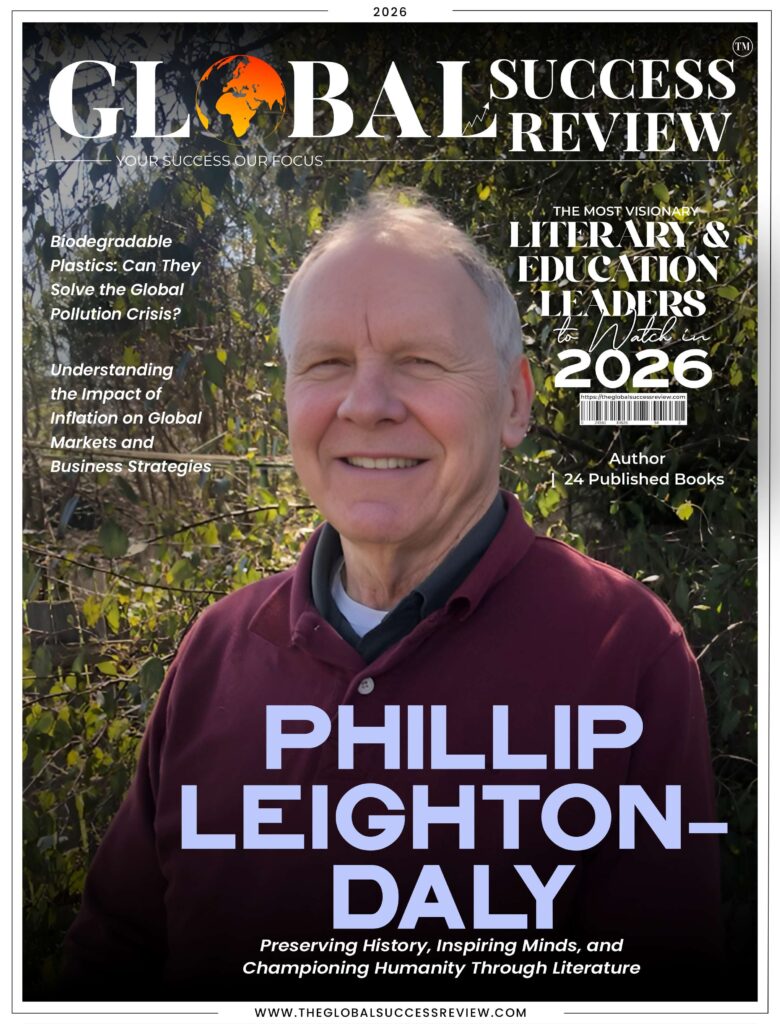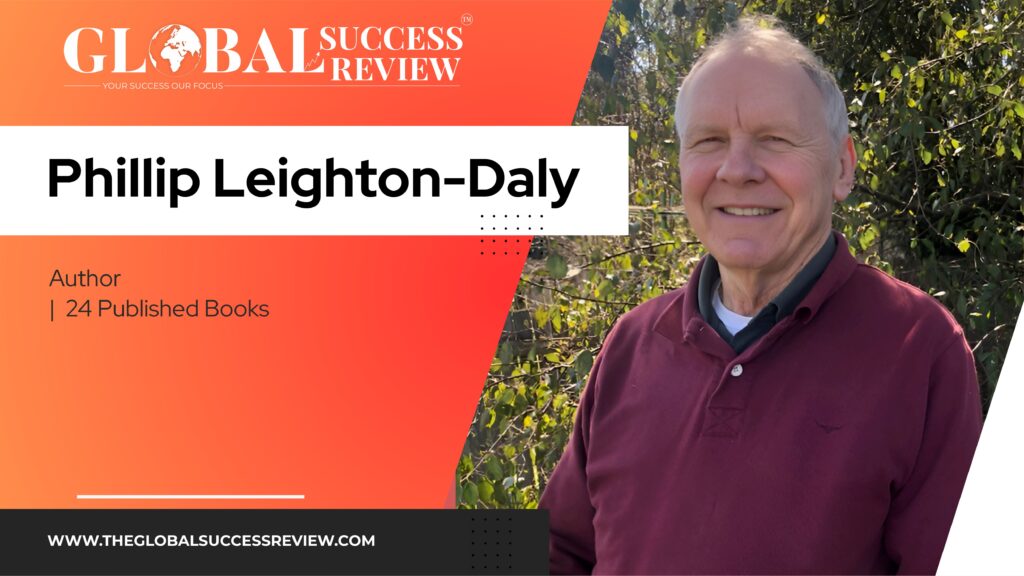
In an era dominated by rapid digital consumption and fleeting attention spans, the enduring power of thoughtful storytelling continues to shape minds, preserve heritage, and ignite meaningful dialogue. Few contemporary literary figures embody this mission with the quiet persistence and intellectual depth of Phillip Leighton-Daly, a veteran educator and prolific author whose body of work spans more than four decades of educational service and 24 published books.
Phillip’s journey is not one driven by celebrity ambition or commercial sensationalism. Instead, it is anchored in something far more enduring, a commitment to truth, moral character, historical preservation, and the celebration of human potential. His writing bridges the worlds of education and literature, weaving lived experience with careful research to produce works that both inform and inspire.
From the coastal landscapes of New South Wales to the rugged bushland of inland Australia, Phillip’s life experiences have provided the raw material for a literary catalogue rich in authenticity. His nonfiction preserves local histories that might otherwise fade into obscurity, while his fiction elevates timeless human virtues such as honour, loyalty, equality, and courage.
Now recognized among The Most Visionary Literary & Education Leaders to Watch in 2026, Phillip Leighton-Daly stands as a testament to what sustained intellectual curiosity, disciplined teaching, and purpose-driven storytelling can achieve.
Early Inspiration: Where the Writing Journey Began
Like many meaningful life paths, Phillip’s entry into writing was not orchestrated through grand ambition but sparked by a moment of recognition. A school inspector once remarked on the quality of his report writing, a seemingly small observation that planted the seeds of a much larger creative journey.
Around the same time, a close friend challenged him to document their shared schoolboy experiences at the coastal resort town of Gosford. That challenge would eventually evolve into his first book, Recollections of the Central Coast, NSW, published in 2004.
The environment itself played a decisive role. Gosford was, in Phillip’s words, “richly endowed with natural resources, industry, natural and social history.” For an observant mind, it was fertile ground.
His debut work stood out for its thoughtful integration of photographs, sketches, and maps, an early indication of his commitment to immersive historical documentation. What began as a personal reflection soon became the foundation of a lifelong mission: to capture stories worth preserving before time erased them.
Defining Vision in a Complex Literary Landscape
Phillip approaches the label of “visionary” with characteristic humility. Yet his body of work clearly reflects a coherent philosophical framework that guides his writing across genres.
His nonfiction focuses on human achievement, lived experience, and the importance of preserving positive narratives for posterity. Meanwhile, his fiction explores moral contrasts through carefully constructed characters.
His protagonists consistently embody:
- Honour
- Truth
- Loyalty
- Inclusiveness
- Equality
Conversely, his antagonists often represent the erosion of these values. This deliberate moral architecture reflects Phillip’s belief that literature should do more than entertain, it should model the best and worst of human behaviour in ways that provoke reflection.
Beyond books, his social media presence extends this mission, where he actively addresses inequality, racism, and moral accountability. For Phillip, literary leadership is not about self-promotion; it is about using every available platform to advocate for ethical progress.
Literature as a Tool for Education and Awareness
Phillip holds a nuanced view of literature’s role in modern education. He recognizes that learning outcomes are shaped by a complex interplay of factors including intelligence, parenting, culture, locality, and socio-economic conditions.
Yet within this complexity, he remains convinced that well-crafted literature can play a meaningful role in expanding awareness, particularly when it is grounded in authenticity and lived experience.
His own work reflects this philosophy. Rather than abstract theorising, his books often emerge from:
- Field research
- Interviews
- Environmental observation
- Historical archives
- Community engagement
This methodology gives his writing a distinctive educational texture. Readers are not simply told about history; they are immersed in it.
A Teaching Career That Shaped a Literary Voice
Phillip’s 45-year career with the NSW Department of Education profoundly influenced both the content and perspective of his writing.
Over the decades, he taught across four distinct geographic regions of New South Wales:
- The Coast
- The Tablelands
- The Western Slopes
- The Western Plains
This geographic diversity exposed him to students and communities from remarkably varied backgrounds, children of fishermen, crop dusters, abattoir workers, doctors, quarry labourers, and beekeepers.
Few writers possess such an extensive grassroots understanding of Australian regional life.
The Power of Primary Education
As a primary teacher, Phillip particularly enjoyed teaching:
- Natural Science
- Social Studies (HSIE)
- Survival swimming
- Sport
For 15 years, he also taught survival swimming across multiple venues, an experience that would later influence the aquatic themes that frequently appear in his fiction.
These decades in the classroom did more than build professional expertise; they provided a living laboratory of human behaviour, character formation, and community dynamics that would later enrich his storytelling.
Preserving Local History: A Mission Rooted in Passion
Phillip’s deep commitment to local history preservation traces back to his university years at Armidale, where he majored in History. His major academic project would later become the conceptual precursor to his first major publication decades later.
What drew him most strongly to regional history was not merely academic curiosity but the risk of cultural amnesia. Many of the communities he studied were rich in heritage yet poorly documented.
The Central Coast region, for example, offered a remarkable tapestry of historical elements:
- Scenic coastal geography
- Island networks
- Mangrove ecosystems
- Citrus and poultry industries
- Shipbuilding heritage
- Maritime disasters
Phillip recognized that without careful documentation, many of these stories could disappear within a generation.
His nonfiction works became, in many ways, acts of preservation as much as acts of authorship.
Research at Scale: The Kenmore Books
Among Phillip’s most demanding projects were his four books on the Kenmore Psychiatric Hospital. These works required extensive investigative effort, including:
- Library research
- State archive analysis
- Historical centre visits
- Hundreds of interviews
- Archival photograph review
- Copyright verification
The scale of this research underscores Phillip’s methodological seriousness. He is not a casual historian; he is a field-driven documentarian of place and memory.
Another particularly demanding project, Wrinkled Armpits and Woolly Butts, required him to venture deep into the rugged Bungonia Recreation Area to photograph and profile trees in difficult terrain.
Such efforts reflect a defining trait of Phillip’s career: intellectual persistence paired with physical commitment.
‘Wednesday’s Child’: A Story Rooted in Family and Memory
One of Phillip’s most widely recognized works, Wednesday’s Child, carries deep personal significance.
Both of his parents served during World War II:
- His mother worked as an army nurse in Sydney and Kenmore.
- His father served with the renowned 39th Battalion in New Guinea.
Their service and the medals they earned left a lasting impression on Phillip’s sense of history and sacrifice.
Years later, while teaching near the deteriorating Kenmore site where his mother had once served wounded soldiers, Phillip witnessed the heritage buildings falling into neglect and vandalism.
He described the experience as emotionally difficult to endure.
This moment became the catalyst for his Kenmore book series. Wednesday’s Child, a 270-page volume, continues to sell strongly and earned him regional recognition.
The book stands as a powerful example of Phillip’s core motivation: to ensure that meaningful histories are not lost to time or indifference.
From Educator to Prolific Author
Phillip’s evolution into full-scale authorship occurred gradually. During his years as a one- and two-teacher school principal, his primary focus remained on educational leadership.
Later, during a 15-year period as a departmental swimming teacher and relief educator, his nonfiction writing began to flourish. Eventually, after completing 13 nonfiction works, he expanded into fiction.
This progression is notable. Rather than beginning with imaginative storytelling, Phillip built his literary foundation on documented reality. His fiction therefore carries a strong sense of environmental and cultural authenticity.
The Craft: Research-Driven Storytelling
Phillip’s research process is both traditional and immersive. His work often involves:
- Visiting State Records in Sydney
- Profiling long-closed rural schools
- Photographing remote historical sites
- Interviewing elderly residents
- Studying colonial ruins
Through this process, he constructs narratives that are firmly anchored in place.
Balancing Fact and Fiction
Interestingly, Phillip reports that balancing accuracy and storytelling is rarely problematic. In nonfiction, factual integrity is paramount. In fiction, however, he allows himself creative freedom, particularly when cultural sensitivities arise.
In some cases, he relocates historically inspired narratives to fictional or even extraterrestrial settings. His work Against the Tide uses outer space as a narrative framework while preserving the social dynamics of 19th-century Hawkesbury River culture.
This technique reflects both creative flexibility and ethical awareness.
The Role of Lived Experience
For Phillip, lived experience is not merely helpful; it is foundational.
His fiction frequently draws on environments he has personally known:
- River systems
- Mountain terrain
- Remote bushland
- Coastal regions
These settings provide what many purely academic writers lack: textural authenticity.
His outdoor pursuits, bushwalking, kayaking, swimming, tennis, and choir singing, have all influenced the atmospheric quality of his stories.
He also credits folk music as a surprisingly powerful creative influence, particularly songs rich in narrative imagery.
Understanding Reader Engagement
Phillip maintains a refreshingly pragmatic view of audience reception. He openly acknowledges that no author can guarantee universal appeal.
In one early test, forty readers reviewed the opening chapter of The Fisherman and His Foundlings. Fourteen expressed a strong interest in continuing, a result Phillip considered excellent.
His philosophy is simple but profound:
Writers must first enjoy what they create. Sustained writing is impossible without genuine personal interest.
This mindset has likely contributed to his long-term productivity.
Measuring Impact: History for the Community
Phillip’s nonfiction catalogue, 13 books focused largely on New South Wales history, has achieved particular resonance within the Goulburn region.
His best-selling works include:
- The four Kenmore volumes
- St John’s Orphanage
- Towrang Stockade
While he candidly notes that book sales alone were never sufficient to replace his teaching income, his impact is measured differently.
He takes particular satisfaction in seeing lower socio-economic residents of Goulburn engage with their city’s heritage.
In this sense, his work functions as community education as much as literary production.
Leadership Lessons from the Classroom
Phillip’s decades in education gave him a grounded understanding of leadership.
He emphasises that effective school leadership is inherently multifaceted and collaborative. Principals and staff together form what he describes as a “rich tapestry.”
In contrast, literary leadership is more individually driven but still depends heavily on partnerships, particularly in promotion and distribution.
This dual perspective gives Phillip a rare ability to understand both institutional and independent pathways to influence.
Storytelling and Empathy in a Fragmented World
Phillip offers a sober assessment of storytelling’s ability to build empathy in today’s highly fragmented global culture.
While he believes strong films and books can generate powerful engagement, he suggests that deep community connection through literature is more achievable in smaller communities than in large metropolitan environments.
It is a realistic, experience-based view shaped by decades of observing audience behaviour.
Health, Balance, and Longevity
Phillip’s commitment to physical activity has been a crucial counterbalance to the sedentary demands of writing.
Even into his seventies, he maintained an active lifestyle. At age 74, doctors discovered a 3.5-centimetre hole in the septum of his heart, which was successfully repaired through a minimally invasive procedure.
His reflection is clear:
An active lifestyle is essential for anyone engaged in long-term intellectual work.
It is advice grounded in lived experience rather than theory.
Literary Influences That Shaped His Voice
Phillip credits several major writers as formative influences:
- Rod Serling
- Larry McMurtry
- Ernest Hemingway
- Oscar Wilde
From Serling, one can see echoes of speculative framing. From Hemingway, the influence of environment and human struggle. From Wilde, the moral and philosophical undertones.
Together, these influences helped shape a voice that is observational, principled, and grounded in narrative imagery.
Philosophy: Quiet Achievement Over Noise
One of the most striking aspects of Phillip’s outlook is his measured relationship with recognition.
His achievements include:
- 24 published books
- 17 titles on Goodreads
- Two regional book awards
- Two Hollywood scripts and trailers
- A strong LinkedIn following
Yet he describes himself as “not a braggart.”
At the same time, he recognizes the practical necessity of visibility in modern publishing. Promotion, he notes, is an essential part of the author’s journey.
This balance between humility and strategic self-advocacy is a defining feature of his professional philosophy.
Looking Ahead: Film and Global Reach
At this stage of his career, Phillip is less focused on producing entirely new manuscripts and more focused on:
- Refining existing works
- Expanding promotion
- Exploring film adaptations
- Increasing international fiction sales
He believes that a successful Hollywood adaptation of one of his action-driven novels could dramatically expand readership.
Given the cinematic qualities of many of his settings, the possibility is not far-fetched.
Legacy: Championing Humanity’s Moral Potential
When asked about the legacy he hopes to leave, Phillip’s answer returns to the core theme that has guided his entire career:
the promotion of humanity’s moral potential.
Across both fiction and nonfiction, his characters and narratives consistently highlight:
- Honour
- Respect
- Honesty
- Courage
- Equality
Through books, social commentary, and community engagement, Phillip Leighton-Daly has spent a lifetime advocating for these values.
Conclusion: A Life Devoted to Story, Service, and Substance
In a literary landscape often driven by trends and rapid turnover, Phillip Leighton-Daly represents something increasingly rare: the long-form, research-grounded, educator-author whose work is built on decades of lived experience.
His journey from classroom teacher to prolific author illustrates the profound creative potential that can emerge when professional life and intellectual curiosity intersect.
Being named among The Most Visionary Literary & Education Leaders to Watch in 2026 is not merely a ceremonial recognition. It is an acknowledgement of a lifetime spent documenting history, mentoring young minds, and crafting stories that elevate the best qualities of human character.
As the publishing world continues to evolve, Phillip’s work stands as a reminder that true literary impact is rarely instantaneous. It is built patiently, book by book, classroom by classroom, community by community.
And in that quiet persistence lies his greatest achievement.