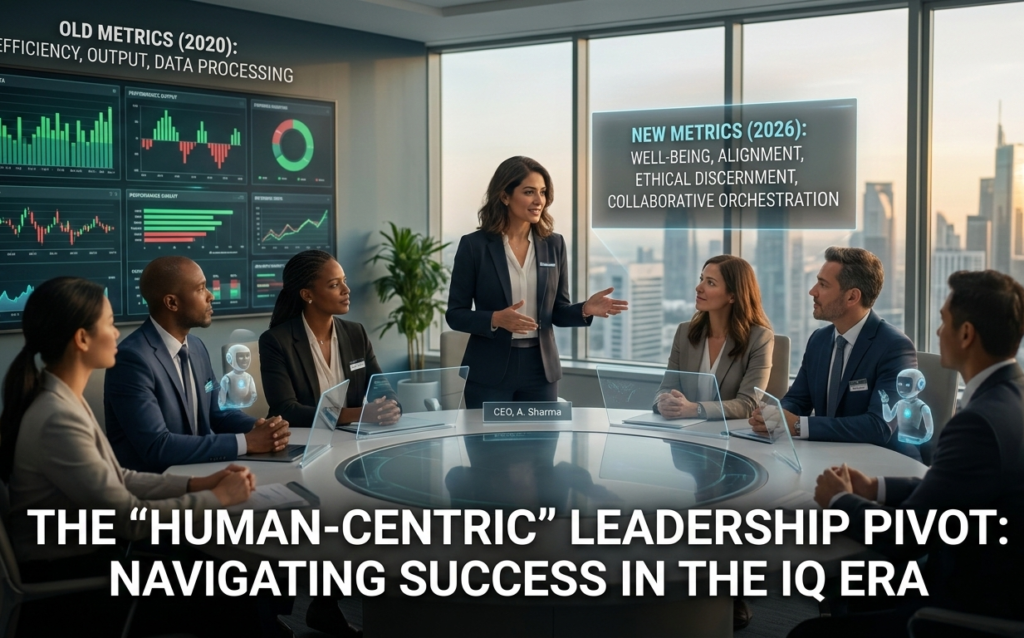
In the professional landscape of 2026, the corporate world has reached a fascinating paradox. As we achieve the “Intelligence Peak”, where Agentic AI can draft strategy, optimize supply chains, and code complex software in seconds, the most valuable asset in any boardroom isn’t technical prowess. It is Humanity.
At The Global Success Review, we are tracking a definitive shift: the move from “Command and Control” to the “Human-Centric” Leadership Pivot.
Why the Pivot is Happening Now
For decades, leadership was measured by “IQ” and the ability to process data faster than the competition. In 2026, AI has commoditized IQ. When a machine can provide the “correct” data-driven answer instantly, the leader’s role shifts from finding the answer to asking the right questions and managing the human impact.
1. The Burnout of the “Middle”
With AI automating cognitive tasks, organizational structures are flattening. Middle management is facing a “Quiet Cracking”, a sense of displacement and burnout. Human-centric leaders are those who can redefine roles, moving their teams from “doers” to “orchestrators.”
2. The Premium on Discernment
Data can tell you what happened, but it rarely explains the nuance of why or the ethics of what’s next. Leadership in 2026 requires Discernment, the ability to apply human values and long-term vision to AI-generated outputs.
The 3 Pillars of the Human-Centric Leader
I. Radical Empathy as a Strategy
Empathy is no longer a “soft skill”; it is a retention strategy. In an era of remote, asynchronous, and AI-augmented work, leaders must intentionally build emotional bridges.
- The Goal: Creating psychological safety so teams feel empowered to experiment with new tech without fear of replacement.
II. Ethical AI Governance
A successful 2026 CEO is also a Chief Ethics Officer. Human-centric leadership involves setting the “Guardrails of Integrity.” Leaders must ensure that as the company scales with AI, it doesn’t lose its “Moral North Star.”
- The Question: “Just because the AI says this is the most profitable path, is it the most sustainable or ethical one for our brand?”
III. Adaptive Resilience
The pace of change in 2026 is exponential. Leaders can no longer promise “stability”; they must instead build “Adaptive Resilience”, the ability of a team to find steady ground in constant motion.
From “Bionic Teams” to “Flourishing Cultures”
The goal of the pivot is to create Bionic Teams: groups where AI handles the “heavy lifting” of data, while humans focus on high-value creative problem-solving and relationship building.
“The successful leader of 2026 doesn’t compete with the machine; they harmonize the machine’s efficiency with the human’s soul.”, The Global Success Review Editorial
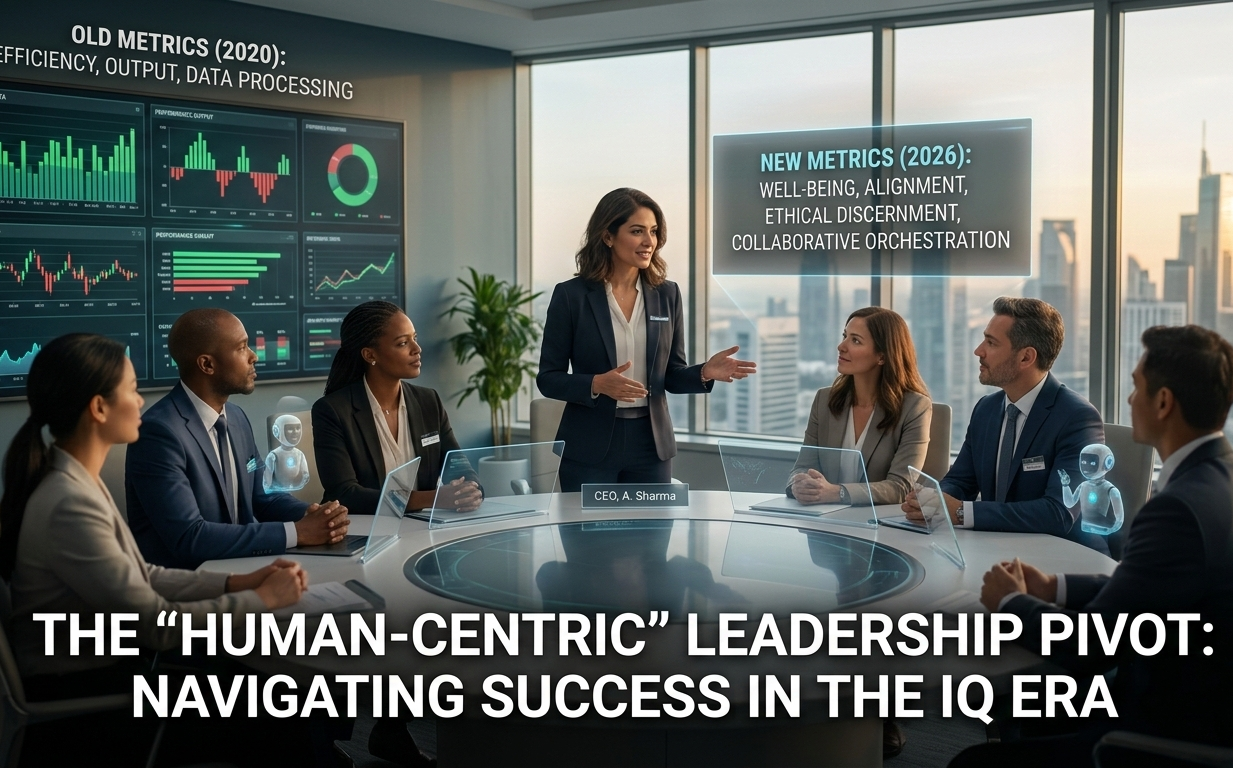
Summary: The Leadership Scorecard for 2026
| Old Metric (2020) | New Metric (2026) |
| Efficiency & Output | Well-being & Alignment |
| Data Processing | Ethical Discernment |
| Individual Genius | Collaborative Orchestration |
| Stability | Agility & Anti-fragility |
Is your leadership team ready for the pivot?
The Global Success Review is committed to profiling the visionaries who are leading this charge. Stay tuned for our upcoming “Influential Women in Leadership” spotlight, where we dive deeper into these human-centric strategies.